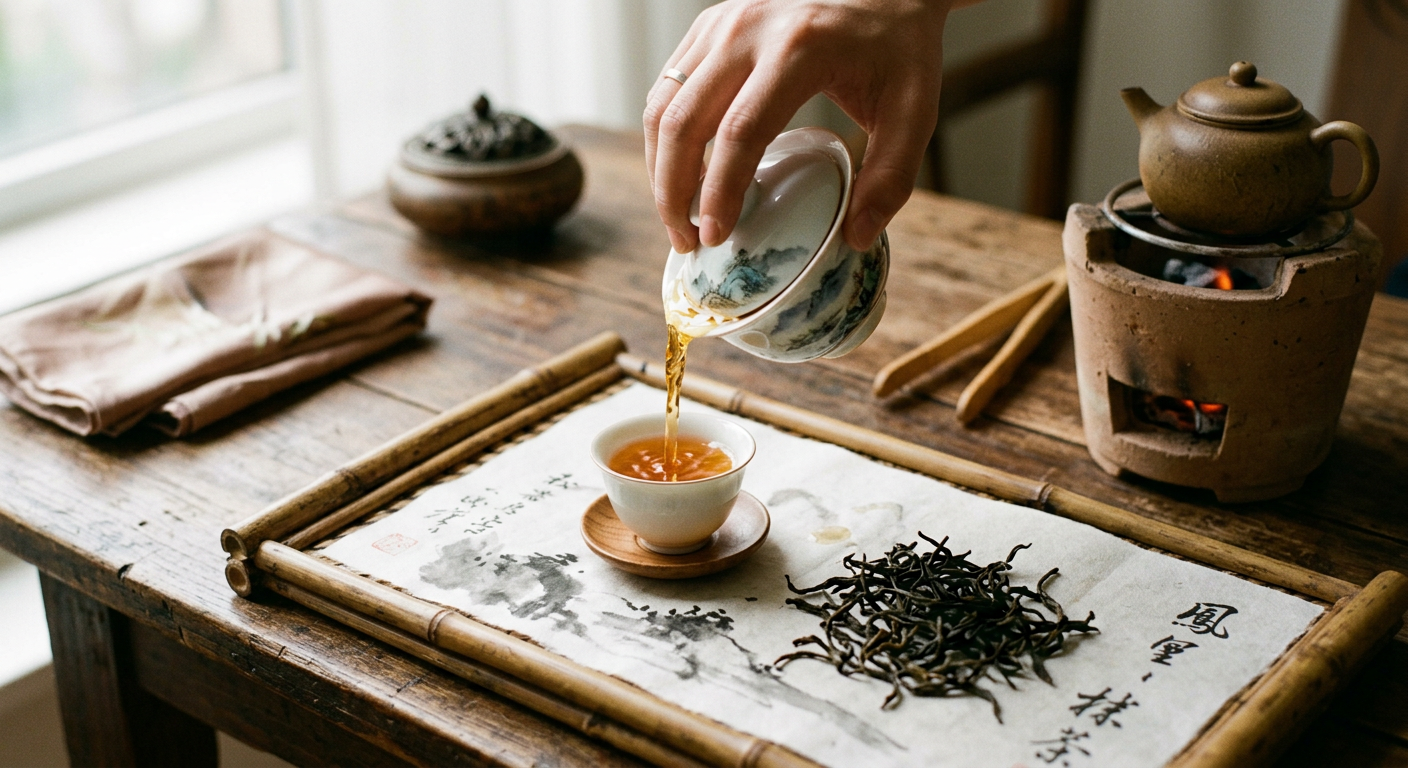
What makes Phoenix Dancong special
If you have ever opened a tin of Phoenix Dancong and been stopped by the perfume rising from the leaves, you already understand why this tea is called the "perfume of tea." Brewed well, it is not merely fragrant; it is layered, insistent, and quietly generous, offering a different face with every infusion.
Phoenix Dancong is an oolong from Phoenix Mountain in Chao'an District, Chaozhou, in eastern Guangdong. It is made from individual, selected bushes of the local Fenghuang Shuixian tea group, and over generations farmers have developed a remarkable range of aromatic types: honey orchid, gardenia, magnolia, cinnamon, ginger flower, and more[source:1][source:4]. The tea is famous for "four excellences" — beautiful shape, emerald color, rich fragrance, and sweet taste — plus a harder-to-define quality known as shan yun, or mountain rhyme, the lingering, mineral depth that distinguishes true Phoenix Mountain Dancong from teas grown elsewhere[source:4].
In 2010, Phoenix Dancong received national geographical indication protection, and in 2020 it was added to the China-EU Geographical Indications Agreement list, giving it the same protected status in Europe as Champagne or Parma ham[source:2][source:3]. That recognition matters not as marketing, but as a sign that the tea's character is inseparable from its place: the red and yellow soils of the mountain, the cool mist, and the old trees that have grown there for centuries.
Choosing your leaves
For your first serious brew, choose a mid-range Dancong in a fragrance family you already enjoy. Honey Orchid (Mi Lan Xiang) is the safest gateway: it is floral, slightly fruity, and forgiving. Gardenia (Zhi Lan Xiang) and Magnolia (Yu Lan Xiang) are more delicate; Almond (Xing Ren Xiang) and Ginger Flower (Jiang Hua Xiang) are more assertive.
Look for leaves that are tightly twisted, slightly oily, and dark olive to brown with a few reddish edges. Broken dust will over-extract and turn bitter; whole, slightly springy leaves are what you want. A good Dancong can be steeped many times, so quality per gram is more important than quantity.
Essential teaware
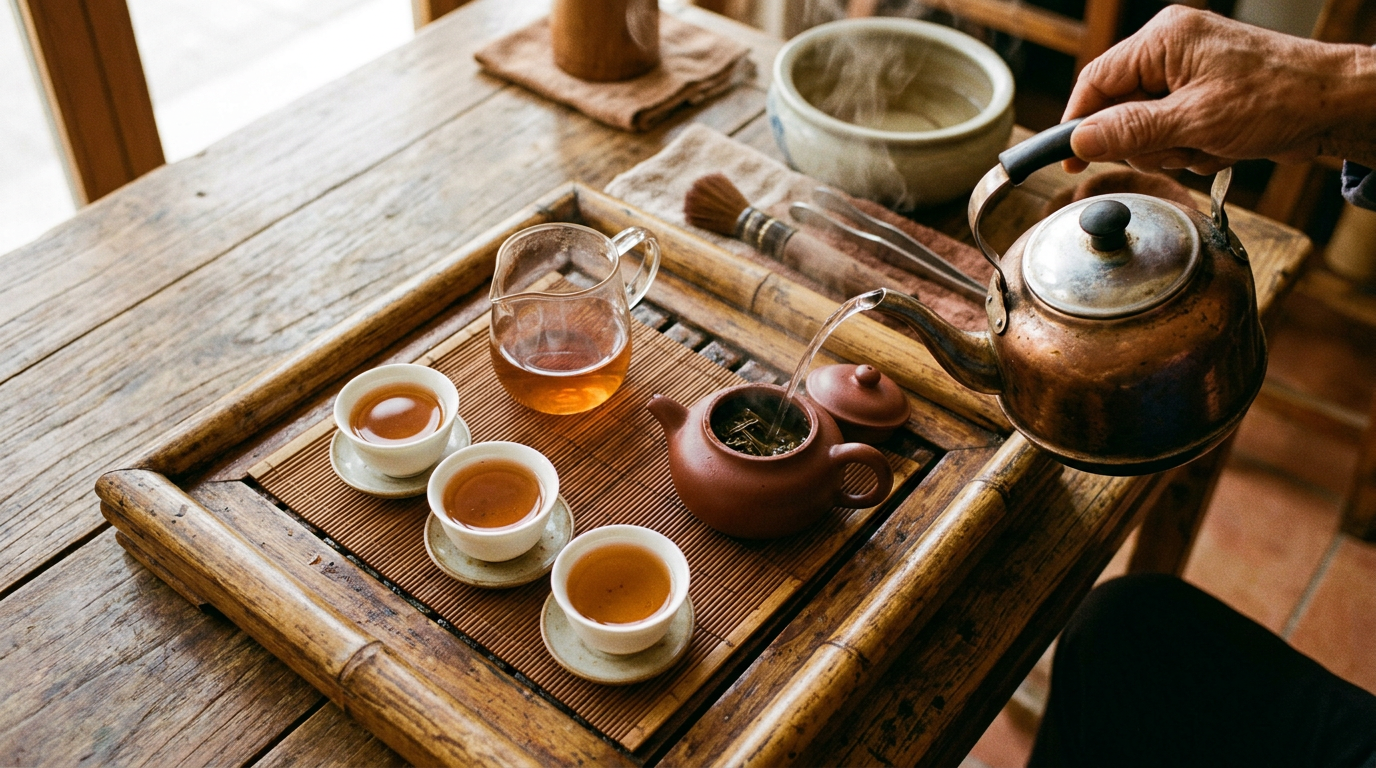
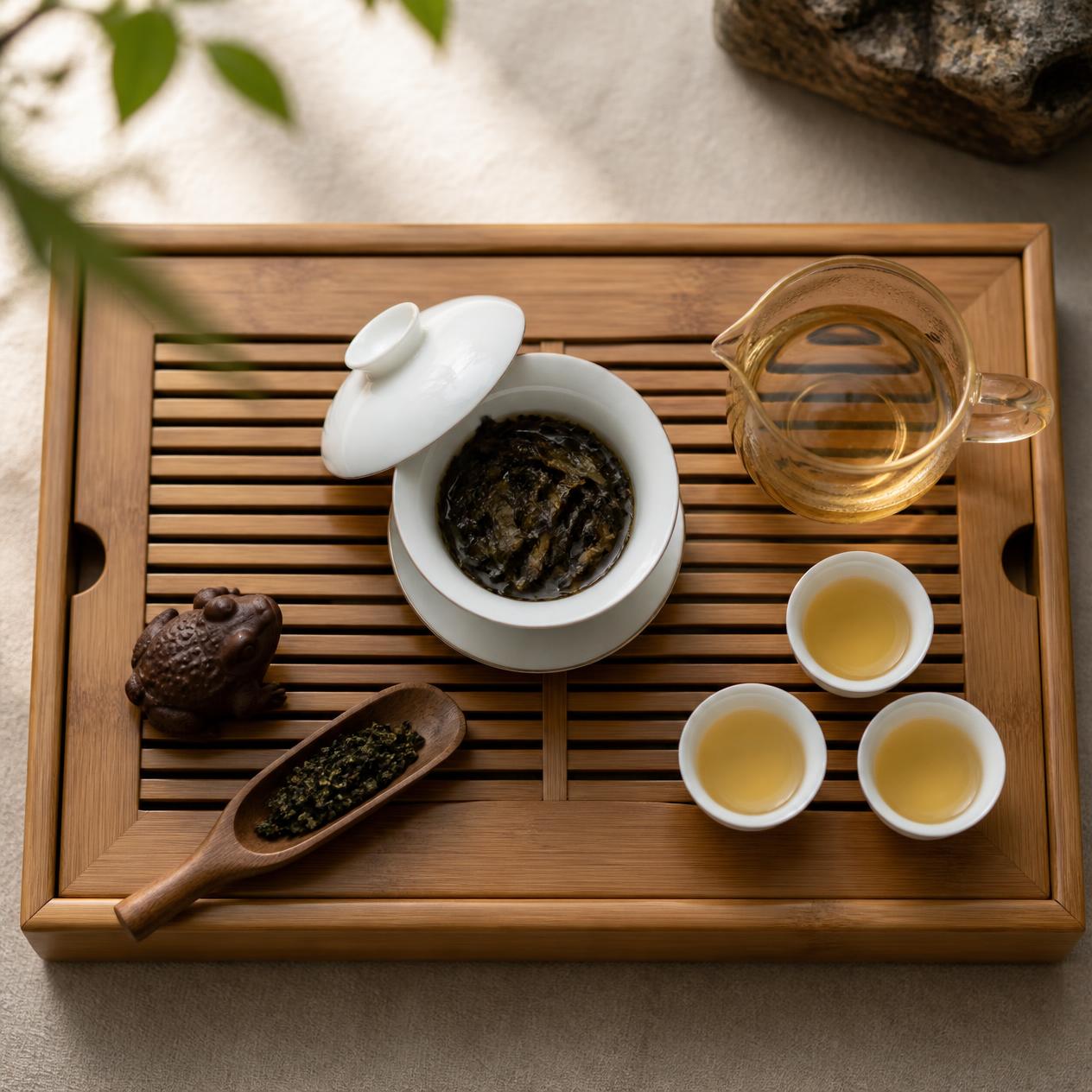
Chaozhou Gongfu Cha traditionally uses a small Yixing clay pot or a lidded porcelain gaiwan, tiny cups, a tea boat, and a fairness pitcher[source:1]. The key principle is concentration: the vessel should be small so that the leaves, water, and heat stay close together.
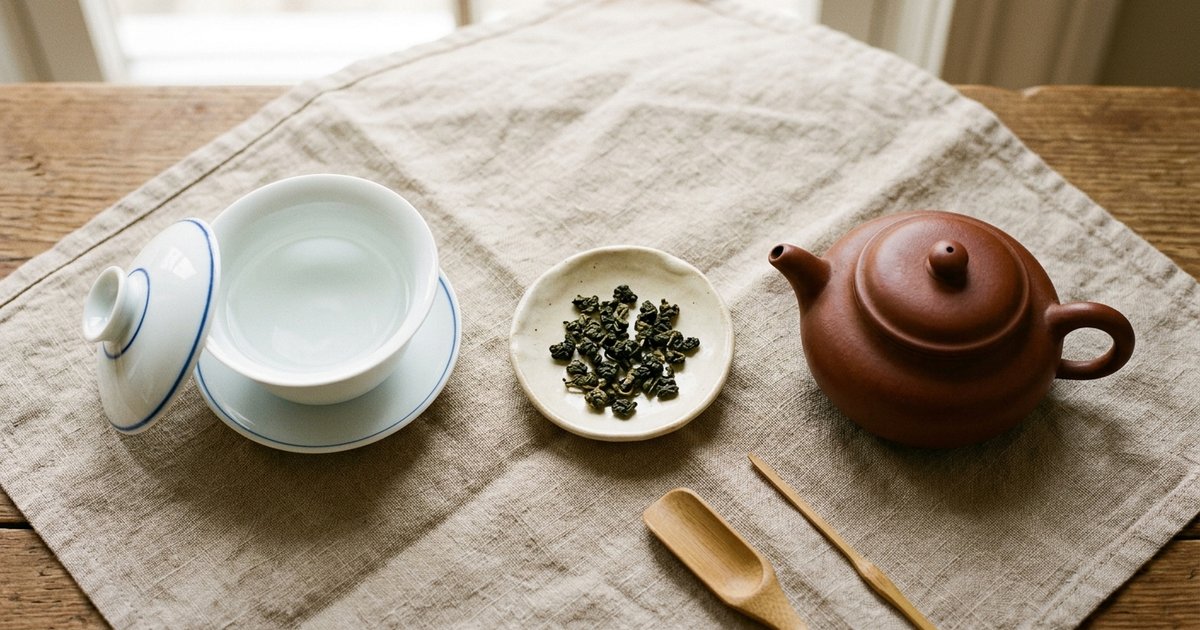
For beginners, a 100–120 ml gaiwan is the most practical choice. It is inexpensive, easy to clean, and shows off the aroma clearly. A small Yixing pot is wonderful later, once you want to build a deeper body over many sessions. Use a scale if you have one; tea volume is deceptive, and Dancong is sensitive to leaf-to-water ratio.
Water quality and temperature
Dancong is a high-aroma oolong, and it needs heat to release that aroma. Use fresh, soft water brought to a full rolling boil, then brewed at roughly 95–100 °C[source:4]. Hard tap water will flatten the fragrance; distilled or reverse-osmosis water can make the tea taste hollow. Spring water or filtered water with moderate mineral content is ideal.
The amount of leaf matters as much as the water. Start with about 6–8 g of tea per 120 ml of water, or roughly 1 g per 15–20 ml. If you prefer a lighter cup, use less leaf rather than cooler water; lowering the temperature too much will mute the high notes.
Step-by-step: how to brew Phoenix Dancong
-
Warm the vessel. Pour boiling water into the gaiwan or pot, then into the cups and pitcher. This preheats everything and prevents the first infusion from cooling too quickly.
-
Add the leaves. Place the measured Dancong into the warm vessel. Give it a gentle shake with the lid on, then lift the lid slightly and inhale. The dry-leaf aroma is your first preview.
-
The awakening rinse. Pour boiling water over the leaves in a high, thin stream, then immediately pour it off. This rinse is not drunk; it opens the leaves and removes surface dust. Some drinkers let the rinse rest a few seconds longer on older or more tightly rolled leaves.
-
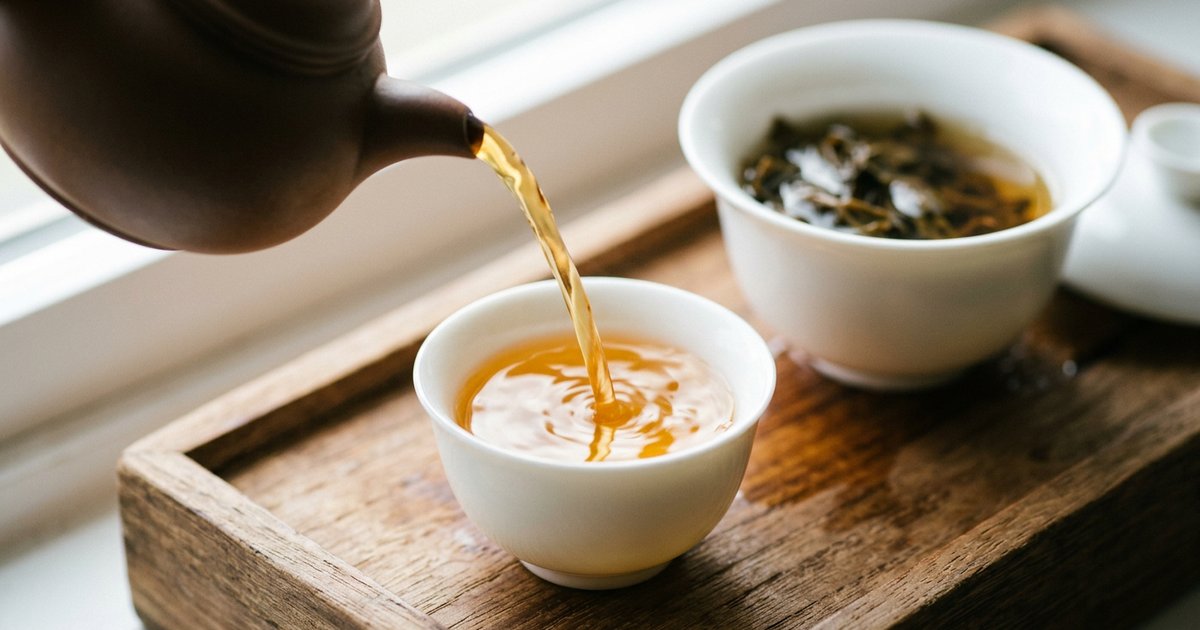
First infusion. Refill with boiling water, pouring from a height in a circular motion so the stream agitates the leaves. Cover and steep for roughly 10–15 seconds. Pour completely into the fairness pitcher, then into the cups.
-
Subsequent infusions. Add about 5–10 seconds for each new steep, adjusting by taste. A good Dancong will deliver eight to twelve infusions, sometimes more. The early steeps are fragrant and bright; the middle steeps deepen into sweetness and body; the later steeps soften into honey and mineral notes.
-
Serve evenly. In the Gongfu Cha spirit, pour low and steadily so each cup receives the same strength. This small courtesy is part of why the method has survived as intangible cultural heritage[source:1].
Reading the tea across infusions
Phoenix Dancong is a tea to watch over time. The first cup may greet you with obvious flowers or ripe fruit. By the third or fourth steep, the aroma often shifts toward something quieter — honey, cream, or a faint spice. The aftertaste, called hui gan, should be sweet and clean, returning at the back of the throat long after the sip.
If the liquor is pale and thin, you may be using too little leaf or water that is too cool. If it is astringent or sharp, shorten the steep time or lower the leaf amount. Dancong is generally sturdy, but it does not hide careless heat or over-steeping.
Common mistakes and how to avoid them
- Water too cool. Many people brew oolongs at 85 °C out of habit. Dancong needs near-boiling water to unlock its fragrance.
- Too much leaf in a large pot. A big teapot dilutes the experience. Gongfu Cha uses a small vessel and many short infusions.
- Over-steeping early steeps. The first two infusions should be brief. You can always lengthen later steeps, but you cannot undo bitterness.
- Ignoring the rinse. The awakening rinse helps the leaves open evenly and gives a cleaner first cup.
- Storing the tea carelessly. Dancong absorbs odors easily. Keep it sealed and away from spices, coffee, or strong soap.
Storing Phoenix Dancong
Store your Dancong in an airtight container, away from light, moisture, and strong smells. A sealed foil bag inside a tin, or a glazed ceramic jar, works well. Unlike pu-erh, most Phoenix Dancong is not meant for decades of aging; it is best enjoyed within one to two years of purchase while its fragrance is still vivid. If you live in a humid climate, consider adding a small food-grade desiccant and checking the leaves every few months.
Conclusion: a tea to return to
Brewing Phoenix Dancong is less about reaching a perfect cup and more about entering a conversation. The tea changes with the water, the weather, and your own attention. Start with good leaves, keep the vessel small and the water hot, and pour with patience — the same spirit we describe in our guide to hosting a Gongfu tea ceremony. Over a session of eight or ten infusions, you will understand why Chaozhou tea drinkers return to this oolong again and again: it is a tea that keeps revealing itself, one sip at a time.
Sources and Further Reading
- Tea Art (Chaozhou Gongfu Tea) — China Intangible Cultural Heritage Network
- Tea Divided into Six Colors, Art Inherited for a Thousand Years — China Intangible Cultural Heritage Network
- Phoenix Dancong Tea Listed as National Geographical Indication Protected Product — Chaozhou Municipal People's Government
- Phoenix Dancong Tea Included in China-EU Geographical Indications Agreement Protection List — Chaozhou Municipal People's Government
- Phoenix Dancong Tea — Baidu Baike