The two leads on a Chaozhou tea table
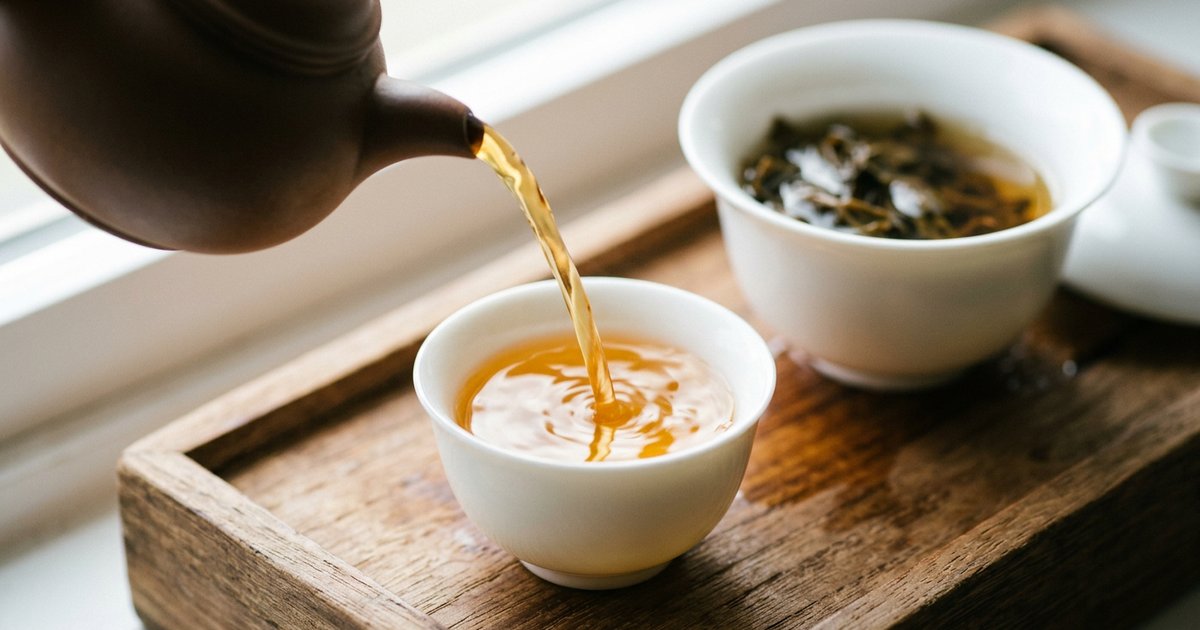
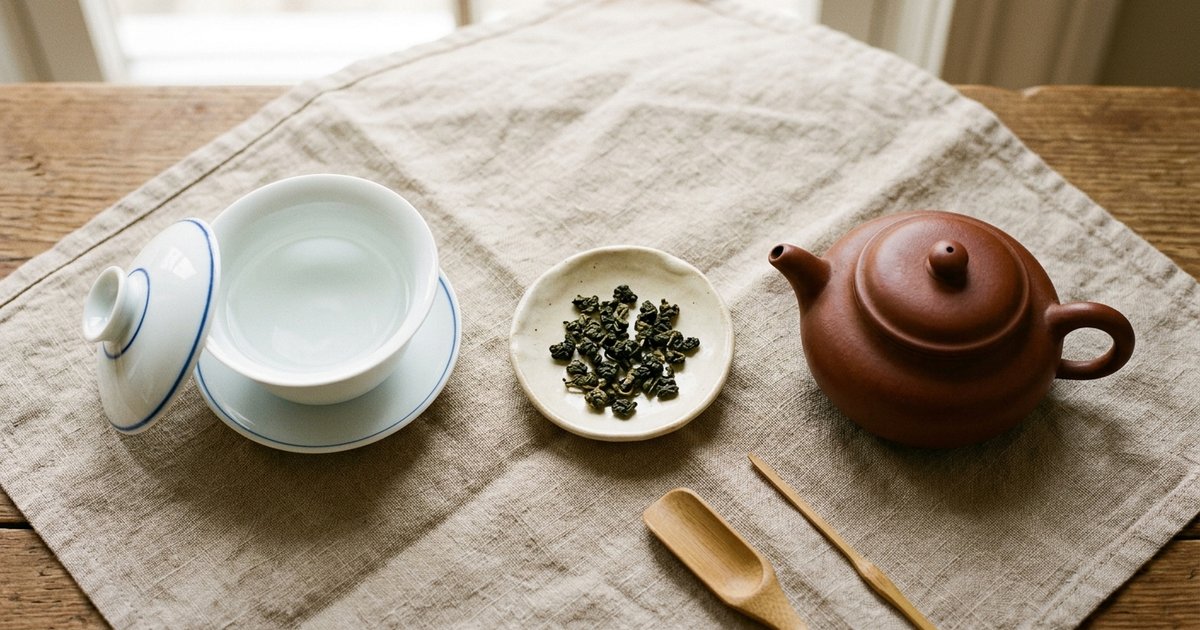
Step into an old tea shop in Chaozhou and the owner will not ask what tea you want first. He will place two things on the camphor-wood tea tray: a white porcelain gaiwan and a small red clay pot. "Try this first." He usually pushes the gaiwan toward a first-time guest and reserves the Yixing pot for someone who has been drinking tea for three years or more.
This is not about price or status. It is a simple rule of Gongfu Cha: the gaiwan lets you meet the tea; the teapot lets you keep the tea.
Chaozhou Gongfu Cha was inscribed on China's national intangible cultural heritage list in 2008. Its brewing sequence includes both "pot receives the oolong" and "scald and roll the cups"[source:1]. In this small city in eastern Guangdong, pot and bowl were never an either-or choice; they are two tools within the same drinking logic. For a beginner, the real question is: where should the first purchase go?
Gaiwan: the all-rounder
The gaiwan has a more poetic name in Chinese — sancai wan (三才碗), the "three talents bowl": the lid is heaven, the bowl is humanity, and the saucer is earth[source:3].
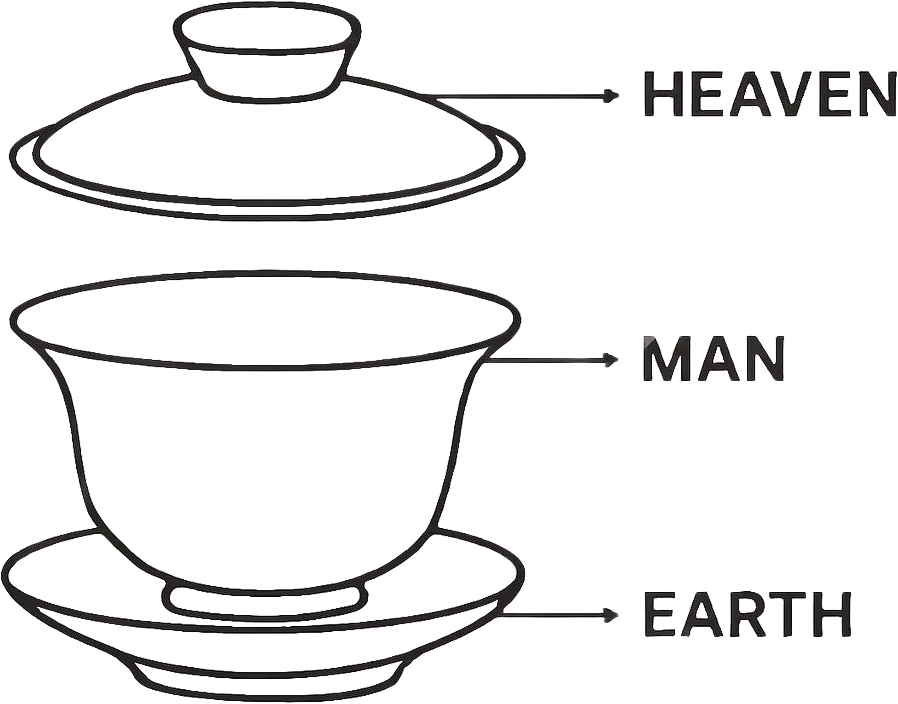
In practical terms it is a wide, lidded cup with a saucer. The most common material is white porcelain; zisha and glass also exist, but beginners should choose white porcelain because the color shows the true hue of the liquor.
Lu Xun once wrote, "To drink good tea, one must use a gaiwan." His reason was practical: a gaiwan lets you "observe the color, smell the fragrance, taste the flavor, and watch the leaf shape"[source:3]. Drop the leaves into the bowl, pour water, and watch them unfold; lift the lid and the aroma rises first; the "lid fragrance" condensed on the inside of the lid is a key clue for judging oolong quality. If the liquor is too strong, angle the lid to let the liquid swirl and adjust the concentration[source:3].
For a newcomer, the gaiwan's greatest virtue is that it does not hide mistakes.
It does not absorb flavor. Brew Tieguanyin today, Da Hong Pao tomorrow, and white tea the day after; as long as you rinse it clean, the tastes will not interfere. It conducts heat quickly and pours quickly, so you can sense how each infusion changes. In Wuyishan, Fujian, tea evaluators use the gaiwan method because it presents the leaf most directly[source:3].
The downside is also famous: it can burn your fingers. Beginners often hold a scalding gaiwan and wonder where to put their fingers, spilling tea everywhere. The fix is simple — practice the grip a few times: thumb and middle finger on the rim, index finger lightly on the lid knob, leave a thin gap for pouring, and tilt fast. Once it becomes familiar, the gaiwan is the most flexible tool in the room.
Yixing teapot: the breathing brewing partner
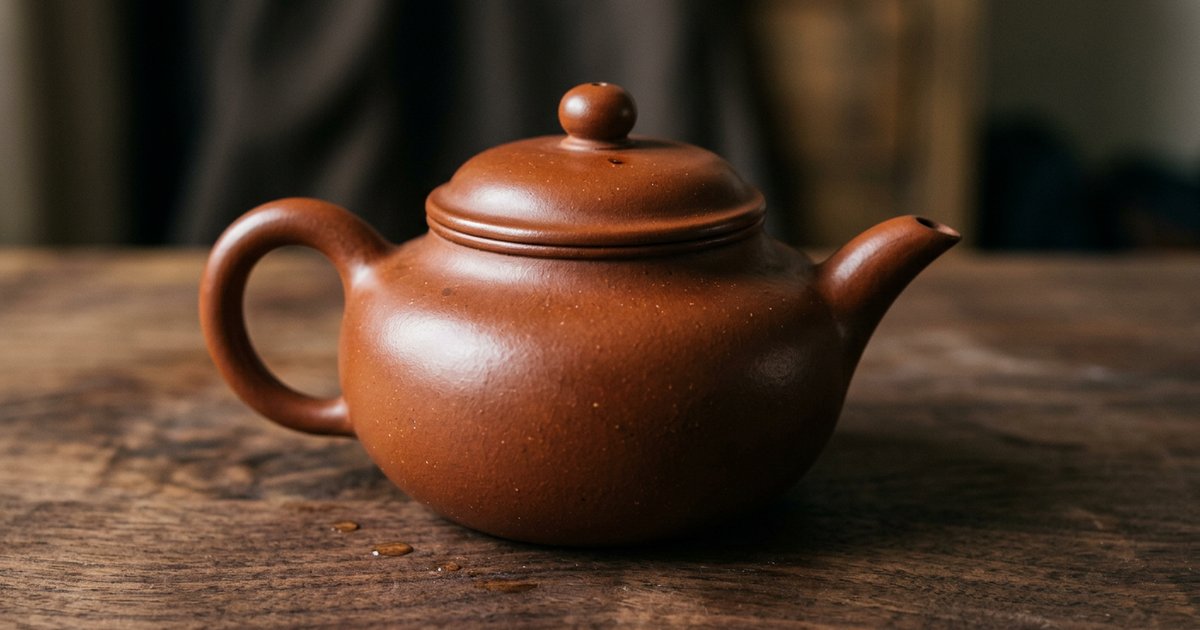
If the gaiwan is a microscope, the Yixing teapot is a small tea garden that matures over time.
Yixing clay teapots originated in Dingshu Town, Yixing, Jiangsu, during the Zhengde reign of the Ming dynasty; the founder is usually considered to be Gongchun[source:4]. The raw material is Yixing's distinctive zisha clay, divided into purple clay, green clay, and red clay — popularly called "wealthy soil"[source:4]. Fired at 1100–1200 °C, this clay forms a unique dual-pore structure: breathable yet watertight, it absorbs tea juice, retains heat well, and grows more lustrous with use[source:4].
Brewing with a Yixing pot gives a few clear experiences:
- More settled aroma. The small spout and tight lid slow aroma loss, especially suited to high-aroma oolongs.
- Softer liquor. The sandy clay adsorbs some astringency, rounding the texture.
- A pot that tastes of tea. Used for one kind of tea over time, the walls accumulate "tea stain." Even an empty pot filled with boiling water can carry a faint tea fragrance[source:4].
- A warm hand feel. A pot often handled gradually takes on a jade-like luster.
But Yixing teapots are also picky. Their flavor-absorbing nature means that if you brew pu-erh today and green tea tomorrow, the pot will hold a confused mix. Hence the Gongfu Cha rule: one pot serves one tea. This is not fussiness; it is dictated by the clay itself.
Five dimensions compared
| Dimension | Gaiwan | Yixing teapot |
|---|---|---|
| Price barrier | Low; a usable white porcelain gaiwan costs from a few dollars to around thirty | High; a genuine Yixing teapot usually starts at several hundred dollars |
| Learning curve | Easy to burn your fingers at first, but familiar within a week | No complex pouring, but seasoning needs care |
| Viewing the leaf | Excellent; the wide opening reveals the leaves at a glance | Poor; the closed body hides the leaves, leaving only aroma and taste |
| Aroma expression | Bright and direct, good for judging quality | Settled and lasting, ideal for high-aroma oolongs |
| Cleaning and care | Simple; rinse with water | Needs seasoning, avoids flavor mixing, no dishwasher |
This table does not ask "which is better," only "which fits your stage right now."
Start with a gaiwan
If you are preparing your first Gongfu tea setting, I recommend starting with a white porcelain gaiwan. Three reasons:
First, it saves money. A good gaiwan costs less than twenty dollars; the rest of the budget can go to tea leaves. Good tea will teach you more about Gongfu Cha than expensive ware.
Second, you learn faster. A gaiwan does not flatter the leaf; strengths and weaknesses show plainly. You quickly build judgment about fragrance, liquor color, and taste.
Third, it is flexible. One gaiwan can brew all six tea families; you do not need separate vessels for each type.
After you have drunk for a while and find one tea you especially love — Phoenix Dancong, rock tea, or ripe pu-erh — then consider buying a dedicated Yixing pot for that tea. By then you will know what you want.
One pot, one tea
Many people are put off by "one pot serves one tea," assuming seasoning requires many pots. It does not. If you own only one Yixing pot, follow one principle: fix it to one tea family.
For example, let that pot brew only oolong, or only pu-erh. Do not brew green tea today, black tea tomorrow, and oolong the day after. Over time the pot will adapt to that family's aromatic profile, and the liquor will become steadily more stable and mellow.
When a new pot arrives, rinse it inside and out with boiling water a few times to remove kiln heat and surface dust. After each session, rinse it with hot water, wipe the body with a soft cloth, and let it air dry in a ventilated place. Do not brew scented or flavored tea in it, and never use detergent — detergent destroys the tea oils and absorbed fragrance already held in the clay.
Chaozhou Gongfu Cha speaks of "clay stove with live fire, sand kettle drawing water." In modern life, a well-seasoned Yixing pot is the continuation of that slow craft[source:1].
Tools serve the tea
The gaiwan-versus-teapot debate can rage across hundreds of forum posts. But return to that old Chaozhou tea table and the answer is simple: the owner gives the guest a gaiwan because he wants the leaf's true colors seen; he reserves the teapot for the regular because that pot has already memorized the flavor that person drinks.
Vessels are a path, not a destination. For a beginner, use a gaiwan to understand the tea, then use a teapot to deepen the tea. The tea is always more important than the vessel — the vessel is only a means of making the tea taste better.
Sources and Further Reading
- Tea Tasting and Culture | National ICH Projects Related to "Traditional Chinese Tea-making Techniques and Related Customs" (Part 2) — 中国非物质文化遗产网 (China Intangible Cultural Heritage Network)
- How Much Do You Know About Chaozhou Intangible Cultural Heritage? — 中国非物质文化遗产网 (China Intangible Cultural Heritage Network)
- Gaiwan — 百度百科 (Baidu Baike)
- Yixing Clay Teapot — 百度百科 (Baidu Baike)
- Gaiwan — Wikipedia
- Yixing Clay Teapot — Wikipedia