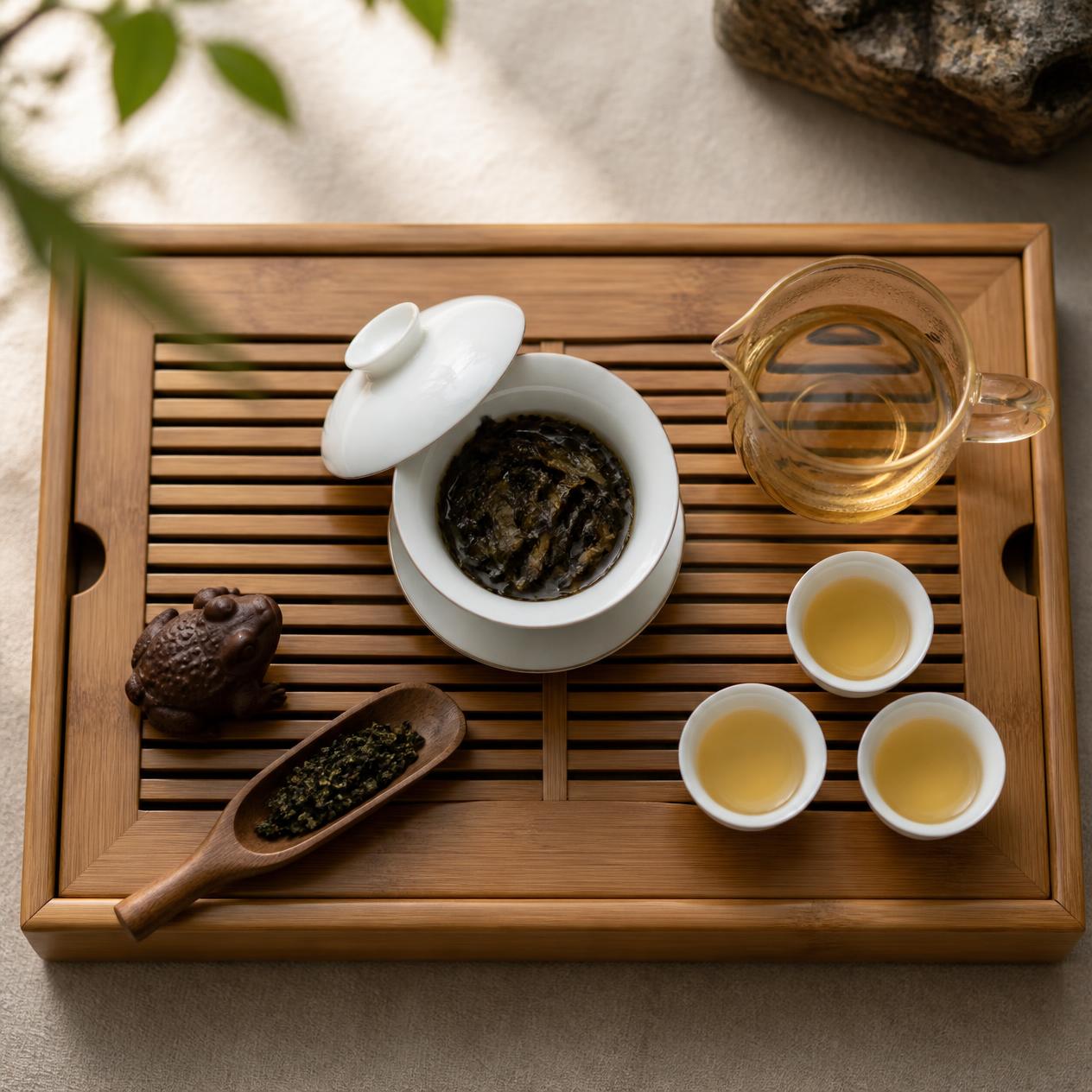
The smallest table in Chinese hospitality
A Gongfu tea set is not a collection of decorative objects. It is a small system built around one idea: extract as much as possible from the same leaves, one short infusion at a time, and serve it to guests while it is still hot and fragrant.
In Chaozhou, where Gongfu Cha took shape, the complete traditional set is sometimes called the "nine items": the brewing vessel, cups, tray, washers, pad, water bowl, stove, kettle, and fan[source:1][source:2]. You do not need all nine to begin. But understanding what each piece does will save you money and make your first sessions smoother.
The brewing core: gaiwan or Yixing pot
Every Gongfu session starts with the brewing vessel. You have two main choices.
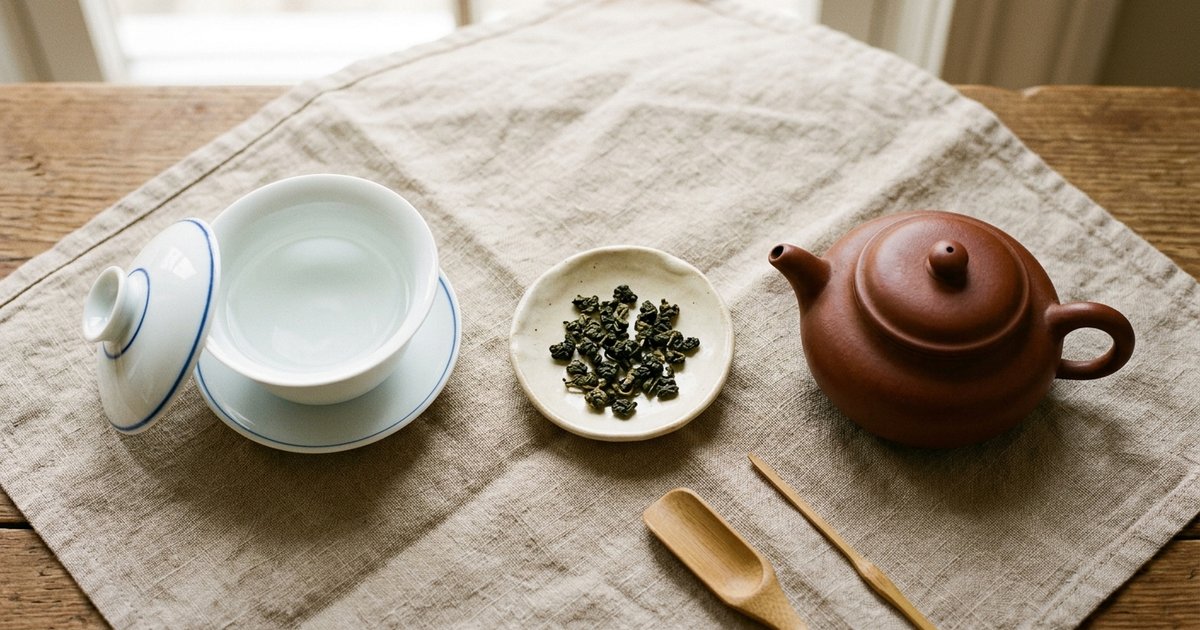
A white porcelain gaiwan is the most versatile first purchase. It is neutral, shows the true color of the liquor, and lets you smell the "lid fragrance" that tells you whether an oolong is well made. Because it does not absorb flavor, you can brew Tieguanyin today and Da Hong Pao tomorrow without crossover. We covered the gaiwan in detail in our guide to gaiwan vs. Yixing teapot.
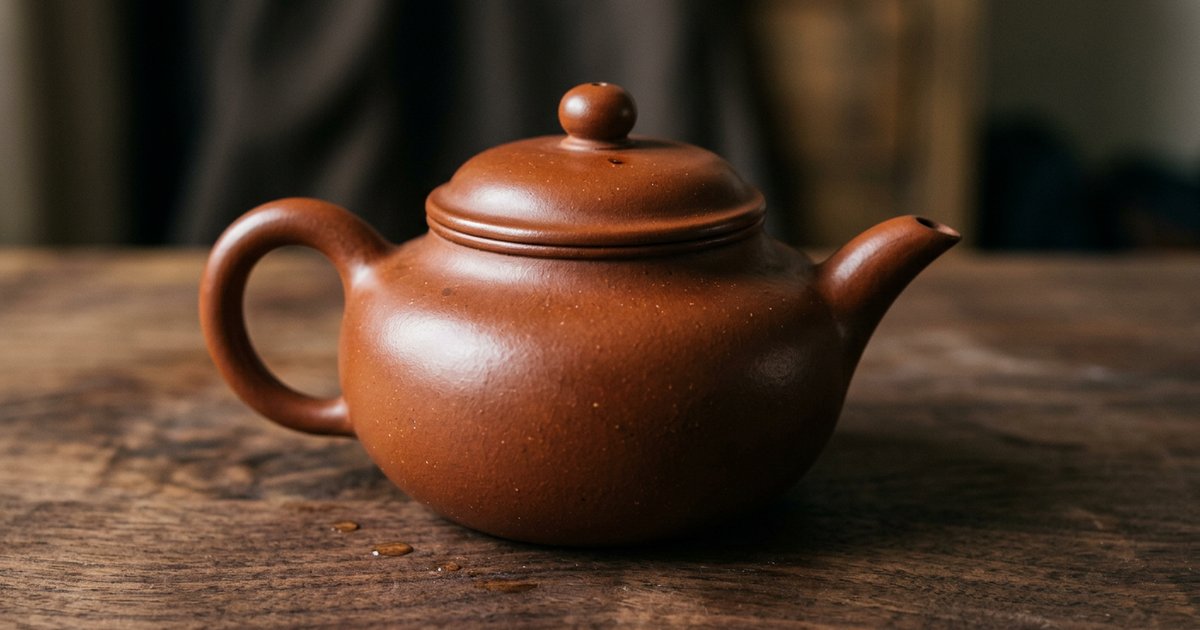
A Yixing clay teapot is the next step once you have found a tea you want to live with. The porous zisha clay absorbs aroma over time and softens the texture of dark teas and high-aroma oolongs. The rule is one pot for one tea family, which we explain in one pot, one tea.
If you are starting out, buy the gaiwan first. A good one costs less than twenty dollars and will teach you more than an expensive pot.
The serving layer: pitcher and cups
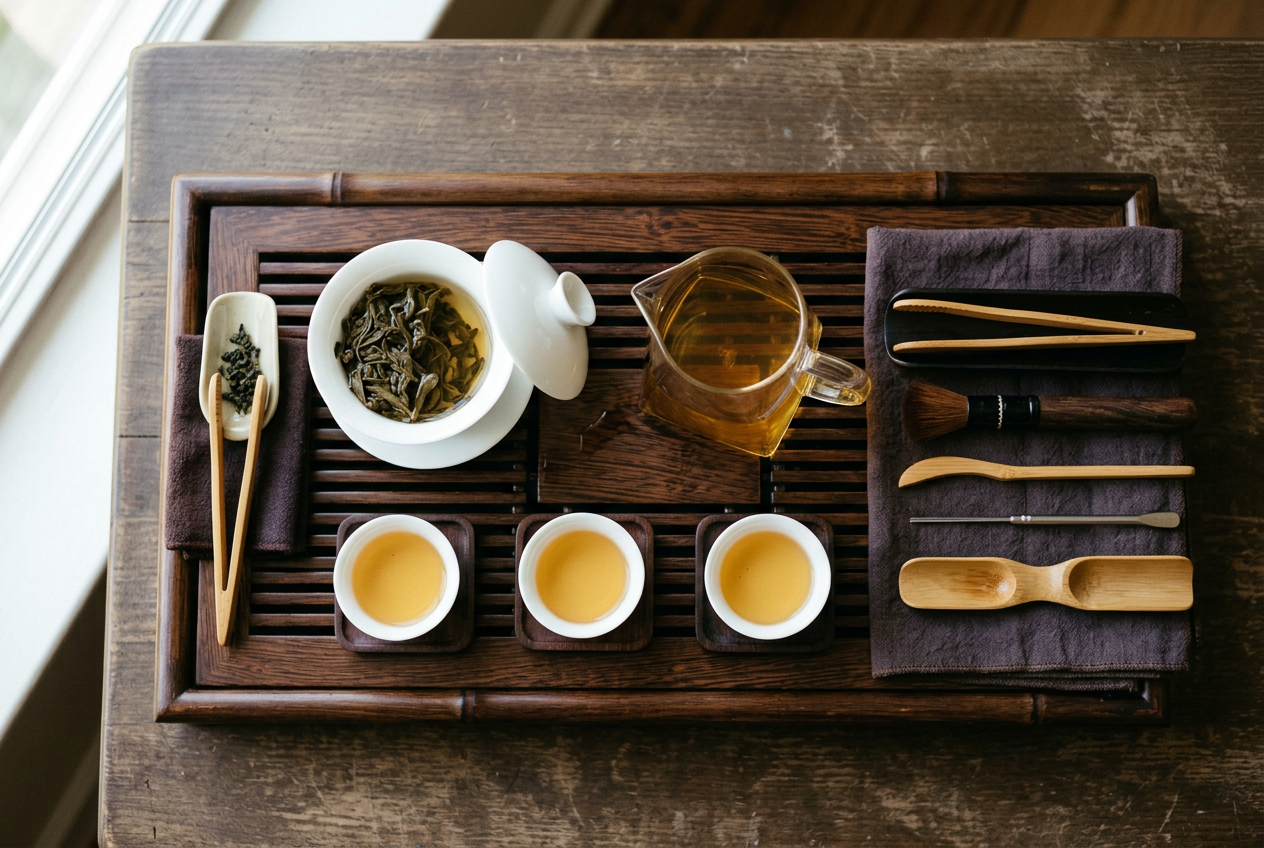
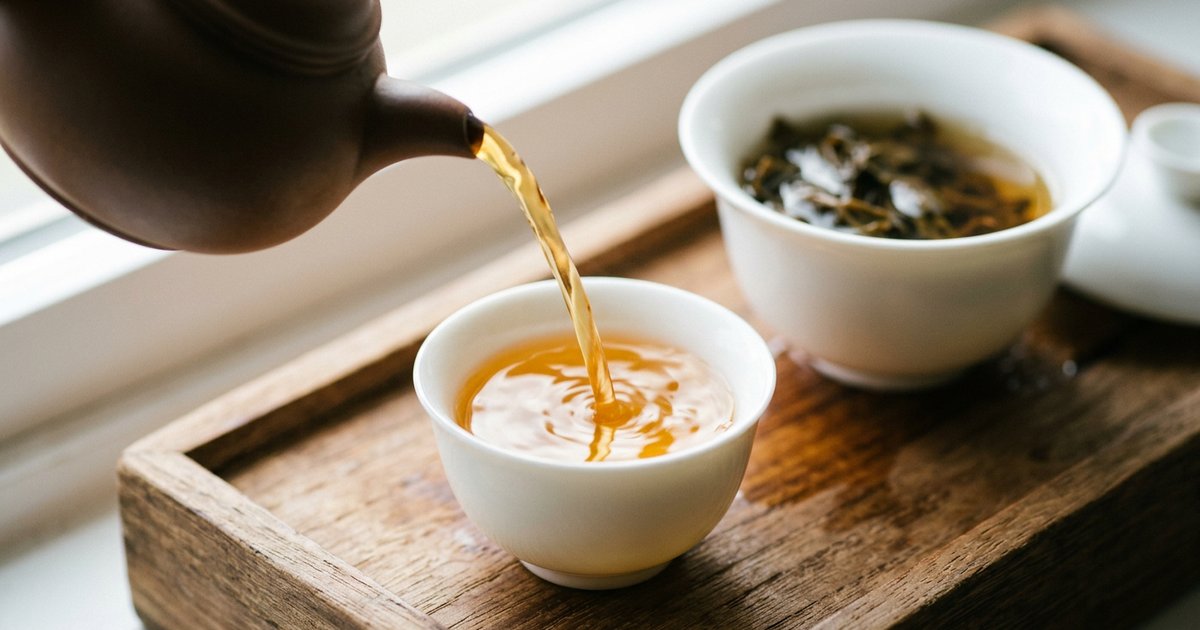
After brewing, the tea does not go straight into the guest's cup. It goes into a fairness pitcher (gongdao bei, 公道杯) first. The pitcher mixes liquor from different parts of the gaiwan or pot so that every cup has the same strength. Without it, the first cup may be thin and the last cup may be bitter.
From the pitcher, the tea goes into tasting cups (pinming bei, 品茗杯). These are deliberately small, holding no more than two or three sips. Small cups keep the tea hot, concentrate the aroma, and slow the conversation. In Chaozhou, three cups are often arranged in a triangle on the tray, passed from guest to guest in turn.
The heat layer: kettle, stove, and trivet
Gongfu Cha needs water just off a rolling boil for oolong, pu-erh, and black tea. The heat layer is what keeps that rhythm going.
The traditional image is a red-clay stove fed with olive-pit charcoal, heating a sand kettle (sha diao, 砂铫) until the water sings[source:1]. In modern homes, an electric gooseneck kettle is more practical. Look for one with fine spout control, because pouring a thin stream into a 100 ml gaiwan without splashing is a real skill.
A trivet or heat pad protects the tea tray and table. If your tray is wood or bamboo, this matters more than it looks.
The detail layer: tea tools and tea pet
Once the essentials are in place, small tools make the session cleaner and more graceful.
- Tea scoop (cha ze, 茶则) measures dry leaf.
- Tea tweezers (cha jia, 茶夹) lift rinsed cups without touching them with your fingers.
- Tea needle (cha zhen, 茶针) clears the spout of a Yixing pot if it clogs.
- Tea funnel (cha lou, 茶漏) keeps leaf fragments out of the pitcher when pouring from a gaiwan.
Then there is the tea pet (cha chong, 茶宠), the small clay figure on the tray. It might be a toad, a dragon, or a child. During the session you pour rinse water or the first steep over it. Over months the tea pet develops a patina, and it gives the guest something to smile at between infusions. It is not required, but it makes the tray feel alive.
Optional upgrades: aroma cups, tea boat, and storage
As your practice deepens, a few extras become useful.
Aroma cups (wen xiang bei, 闻香杯) are tall, narrow cups used to smell the lingering fragrance of an oolong before drinking. The tea is poured into the aroma cup, then transferred to the drinking cup, leaving the empty aroma cup for the guest to smell.
A tea boat (chuan, 船) or small saucer under the gaiwan catches any drip and lets you lift a hot vessel without burning the tray.
A tea caddy keeps your leaves away from light, air, and kitchen smells. For compressed pu-erh, a pu-erh pick is useful for breaking cakes cleanly.
A starter shopping list
You do not need the full Chaozhou nine items on day one. This is the minimum viable Gongfu set:
- One white porcelain gaiwan, 100–120 ml
- One glass or porcelain fairness pitcher, 150–200 ml
- Two to four small tasting cups, 30–50 ml each
- One bamboo or resin tea tray with a drain or reservoir
- One electric kettle with good pour control
Total budget: well under a hundred dollars if you shop carefully.
Add later, in this order: tea tools, a tea pet, an aroma cup set, and finally a Yixing pot once you have found your tea. When that pot arrives, start with a simple seasoning routine rather than folk shortcuts. The goal is not to collect beautiful things. The goal is to make better tea for the people sitting across the tray from you.