From drinking to tasting
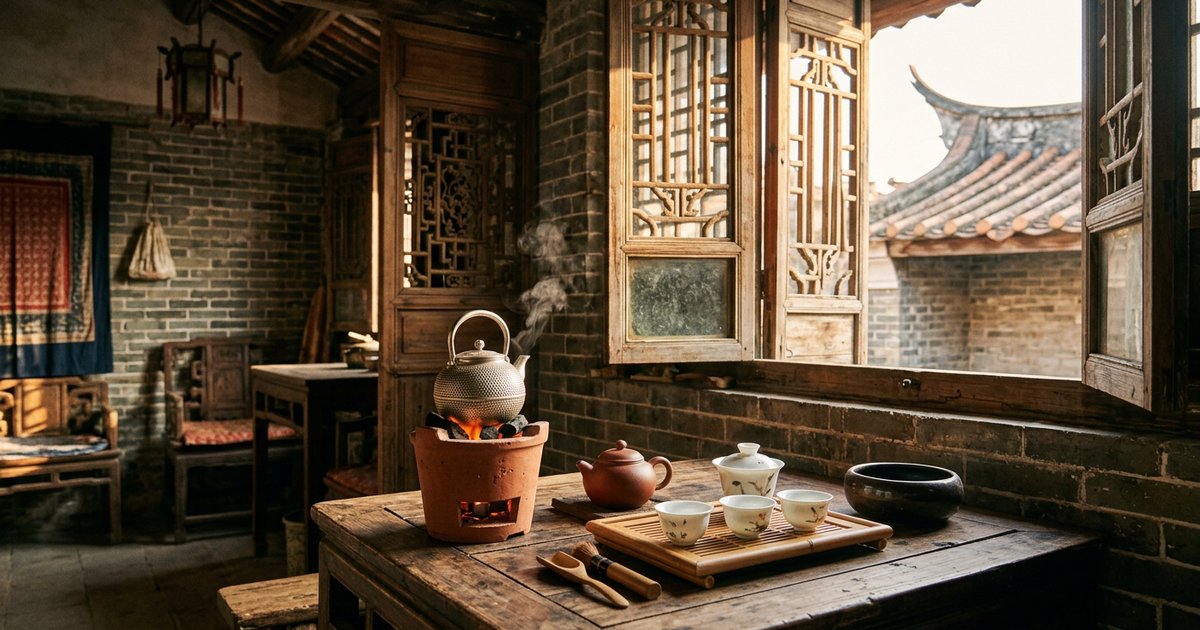
Many Westerners feel lost the first time they drink Gongfu Cha. The host pours a tea no larger than a thumb into a tiny cup. You drink it in one gulp — "Hmm, fragrant" — and the host pours again, and you gulp again. After three rounds you begin to wonder if you are drinking water.
The problem is not the tea. It is the way of drinking.
In Chaoshan, gulping a big cup all day is called niu yin — "ox drinking"[source:1]. Real tea tasting means dividing one cup into several sips, each one slower, letting the liquor rest in the mouth and opening the eyes, nose, and tongue together. Gongfu Cha sums up this method in four words: observe the color, smell the fragrance, taste the flavor, and feel the returning sweetness[source:2].
This article is not about mysticism. It is about four actions you can start practicing today.
Step one: color
The first thing in tea tasting is not drinking. It is looking.
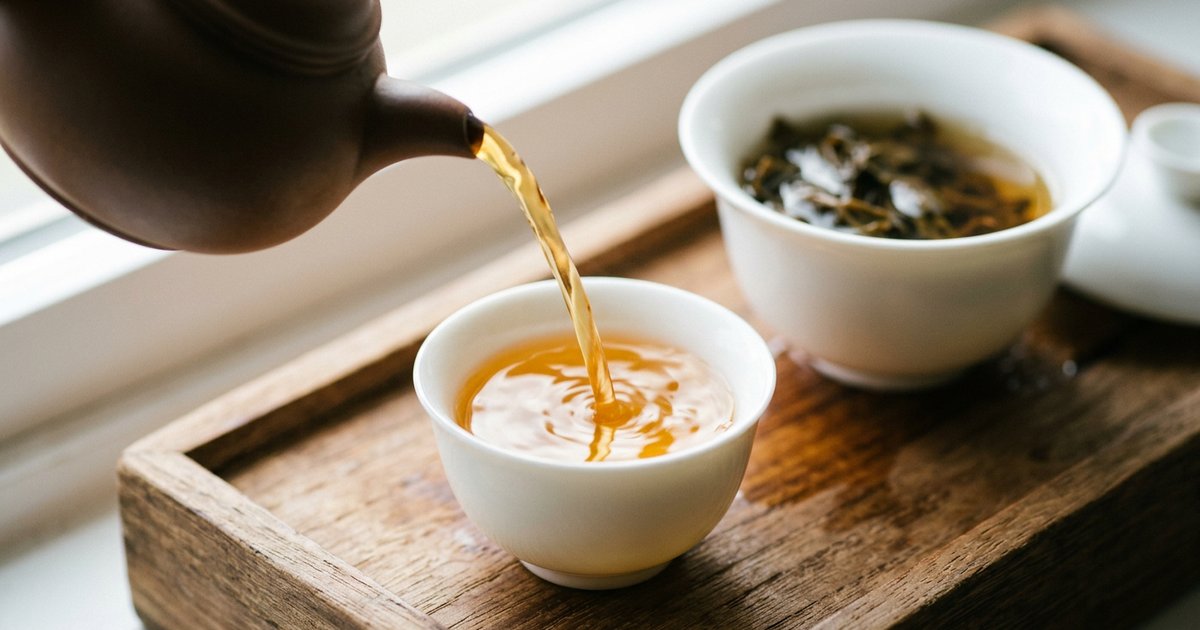
Pour the liquor into a white or light-colored cup and hold it to the light. Notice three things:
- Clarity. Good tea is usually bright and clear, like amber or crystal. A cloudy liquor with suspended particles may be a processing problem, or you may have brewed too strong or too long.
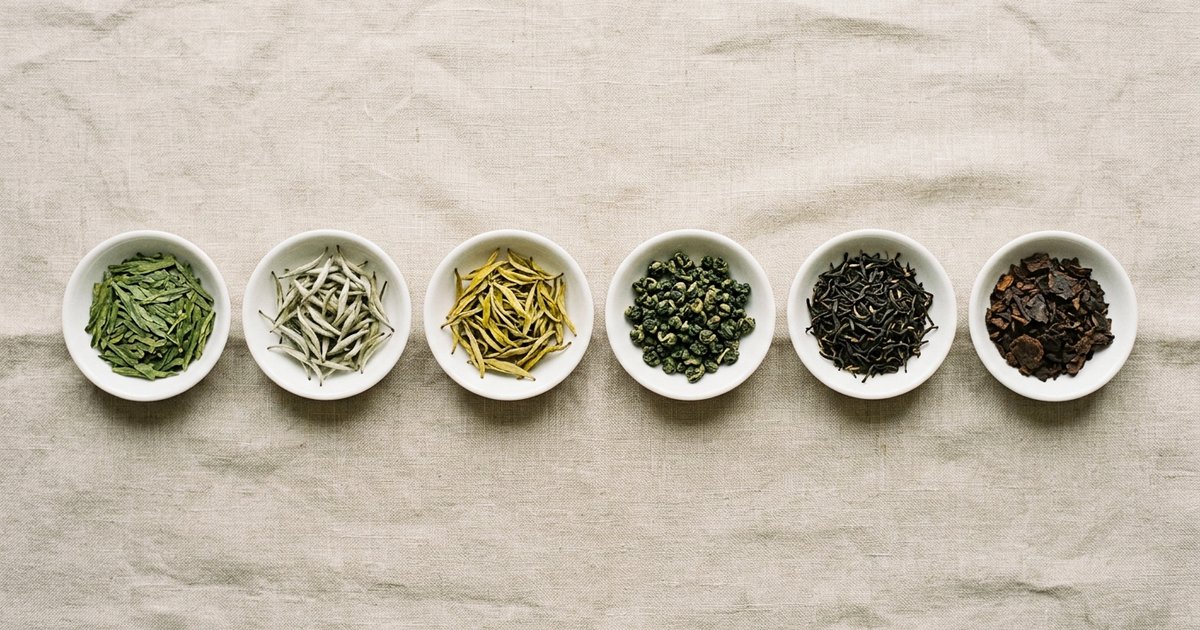
- Color. Each tea family has its own baseline color. Oolongs (Tieguanyin, Phoenix Dancong) are usually golden to orange; black tea leans red and bright; raw pu-erh is yellow-green; ripe pu-erh is reddish-brown.
- Brightness. Good tea has an "oily sheen"; the surface of the liquor seems to carry a thin layer of light. A dull, lifeless liquor often lacks freshness.
In Chaozhou Gongfu Cha, evaluators use a white porcelain gaiwan and small cups because white porcelain shows the true color of the liquor[source:4]. A fancy patterned cup is like putting a filter over the tea.
Step two: aroma
Aroma is divided into two places: lid fragrance and cup-bottom fragrance.
Lid fragrance comes from the gaiwan lid. After pouring, lift the lid but do not drink yet. Bring the lid close to your nose and inhale gently. What you smell now is the tea's most volatile aroma — floral, fruity, honeyed, roasted. Phoenix Dancong's gardenia, Mi Lan Xiang's sweet potato honey, and Xing Ren Xiang's nutty notes all show most clearly on the lid[source:2].
Cup-bottom fragrance comes from the empty cup after you finish the tea. Turn the cup upside down for a moment, then flip it and smell the bottom. This aroma is more settled and lasting, the "base" of the tea. A good tea's cup-bottom fragrance lingers for several minutes.
Gongfu Cha says, "Smell the tea first, then observe the color," because fragrance is the most captivating part of tea and the easiest to lose[source:4]. Smelling before drinking is a basic respect for the leaf.
Step three: taste
Now you may drink. But do not swallow. Sip.
Draw a small amount of liquor into the mouth and let it touch the tip of the tongue first, then glide slowly across the sides of the tongue, and finally reach the back. The tip of the tongue senses sweetness most; the sides sense sourness and umami; the back is the territory of bitterness and astringency[source:1].
While tasting, ask yourself three questions:
- Strong or light? Stronger is not always better; the concentration should match the tea. Rock tea can be stronger; fragrant Tieguanyin should be lighter.
- Smooth or astringent? Good tea enters smoothly, like silk across the tongue. If the astringency is strong and lingers, the leaf quality or brewing may be off.
- Is there layering? The first sip may be floral, the second fruity, the third leaves a mineral coolness. This change is the yun (韵) Gongfu Cha pursues.
The small cups of Gongfu Cha are deliberate. With a small cup, each sip is tiny, so you can focus on the sensation on the tongue instead of gulping[source:3].
Step four: finish
After swallowing, do not speak immediately. Close your mouth and focus on the back of the tongue and the throat.
If, after a moment, a gentle sweetness rises from the back of the tongue, this is what Chinese call huigan (回甘), "returning sweetness." It is not the sweetness of sugar; it is the natural sweetness the mouth produces as the bitter and astringent compounds in the liquor fade[source:1]. The faster and longer the huigan, the better the tea is usually considered.
One layer deeper, if the throat still holds fragrance, even a cool sensation moving toward the chest, this is called houyun, "throat charm." High-mountain Phoenix Dancong grown above 600 meters is especially known for this[source:1].
Huigan and houyun cannot be faked. A tea may smell magnificent, but if the mouth feels dry and the throat tight afterward, it is not good tea.
A fifteen-minute practice
If you really want to learn tea tasting, you do not need many teas. You only need to drink the same tea carefully for five rounds.
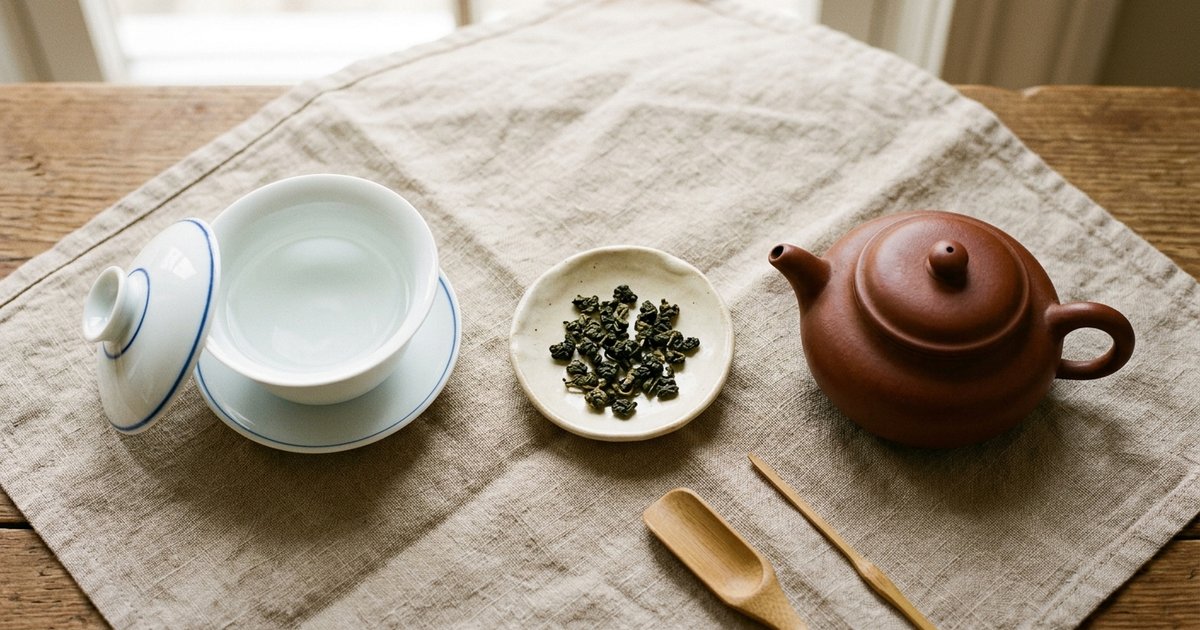
Choose an oolong you can easily find — Tieguanyin, Phoenix Dancong, or rock tea. Prepare a gaiwan, a fairness pitcher, three small cups, and a notebook.
- Round one: observe only; do not drink. Record the color and clarity of the liquor.
- Round two: smell the lid fragrance, then take a small sip. Record the main aroma you notice.
- Round three: sip, and record whether the liquor is smooth or astringent, strong or light.
- Round four: after drinking, close your mouth for ten seconds. Record whether huigan appears and where on the tongue you feel it.
- Round five: connect all impressions and write one sentence summarizing this tea.
Do this practice three times, and your descriptions will move from "fragrant" to "orchid fragrance, slightly astringent entry but fast huigan, cool throat charm."
Tasting is attention training
Gongfu Cha turns drinking tea into a slow-motion exercise. It is not for showing off; it is for pulling attention away from the phone, the email, the to-do list, and concentrating it in one cup of tea.
When you can tell the difference between the third and fifth infusion of the same tea, you are training something more valuable: awareness of the present moment. This may be why people in Chaoshan treat tea almost like rice — it is not just thirst-quenching, but a pause in daily life[source:2].
So the next time someone pours you a cup of Gongfu Cha, do not gulp it. Look first, smell, sip small, and wait for the huigan. The tea will show you it is richer than you imagined.
Sources and Further Reading
- Tasting Tea Is Like Tasting Life: Scholar Gu Zuoyi Explains the Five Realms of Tea — 南方+ (Nanfang Plus)
- Elegance in Gongfu Tea — Gongfu Tea and Chaoshan Tea Culture — 广东省文化馆 (Guangdong Provincial Cultural Center)
- How Much Do You Know About Chaozhou Intangible Cultural Heritage? — 中国非物质文化遗产网 (China Intangible Cultural Heritage Network)
- Tea Tasting and Culture | National ICH Projects Related to "Traditional Chinese Tea-making Techniques and Related Customs" (Part 2) — 中国非物质文化遗产网 (China Intangible Cultural Heritage Network)
- Gongfu Tea — Wikipedia