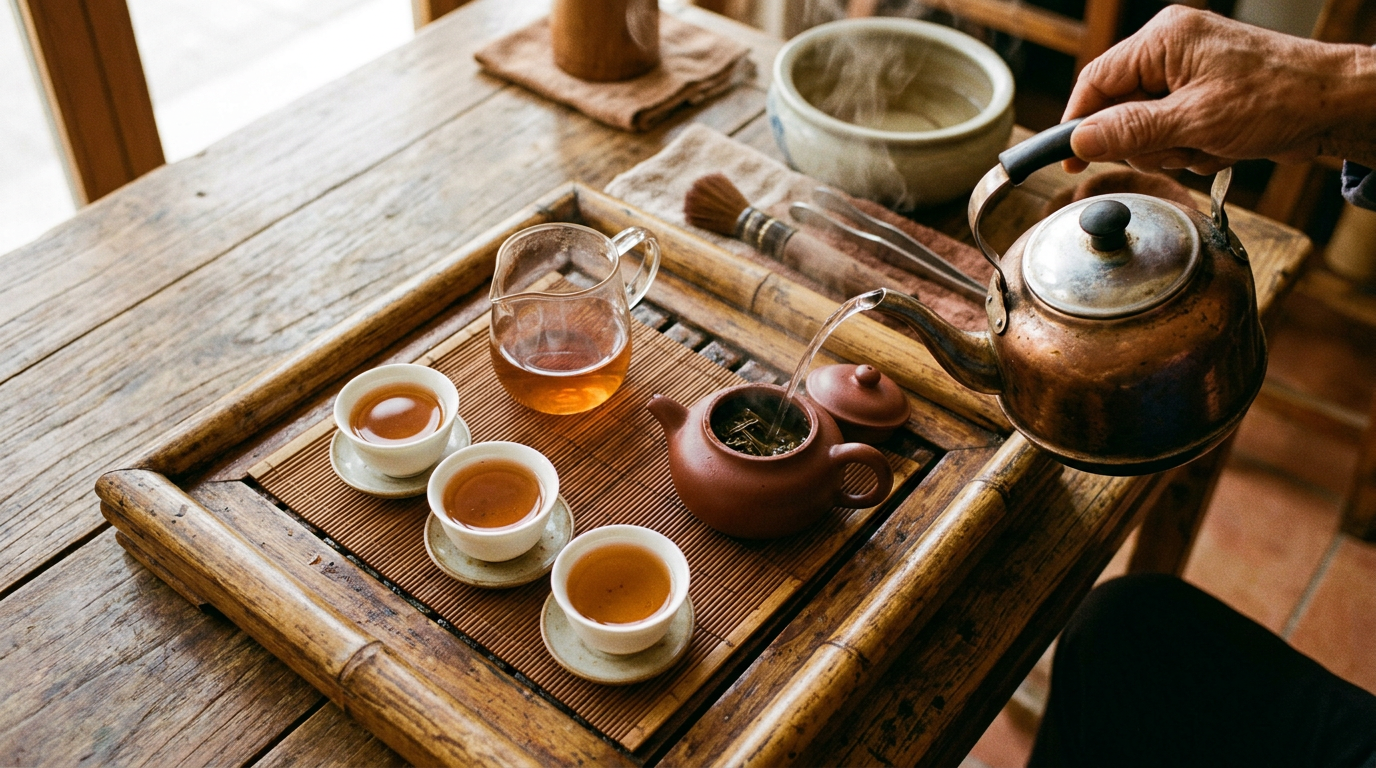
Chaozhou Gongfu Cha: The 21 Steps of a Chinese Tea Ceremony
In Chaozhou, a small city on the coast of Guangdong, making tea is not a chore. It is a way of receiving guests, a way of showing care, and a way of slowing the day down to the speed of hot water. The local form — Chaozhou Gongfu Cha (潮州工夫茶) — was listed as a national intangible cultural heritage in 2008 and later became part of the UNESCO entry "Traditional tea processing techniques and associated social practices in China" in 2022. What makes it special is not just the tea, but the twenty-one steps that turn a simple pot of leaves into a small ceremony. For a home-friendly version you can use at your own table, see our guide to hosting a Gongfu tea ceremony step by step.
What the twenty-one steps are
The twenty-one steps of Chaozhou Gongfu Cha are a complete sequence from the moment the host enters the tea space to the moment the last drop is sipped. They are:
- 茶具讲示 — Presenting the teaware
- 茶师净手 — The host washes hands
- 泥炉生火 — Lighting the clay stove
- 砂铫掏水 — Filling the clay kettle
- 榄炭煮水 — Boiling water over olive-pit charcoal
- 开水热罐 — Warming the teapot with boiling water
- 再温茶盅 — Warming the tea cups again
- 茗倾素纸 — Pouring the dry leaves onto plain paper
- 壶纳乌龙 — Loading the oolong leaves into the pot
- 甘泉洗茶 — Rinsing the leaves with sweet water
- 提铫高冲 — Raising the kettle and pouring high
- 壶盖刮沫 — Scraping the foam from the lid
- 淋盖追热 — Pouring hot water over the lid
- 烫杯滚杯 — Rolling hot water through the cups
- 低洒茶汤 — Pouring the tea low
- 关公巡城 — Guan Gong patrols the city
- 韩信点兵 — Han Xin points the soldiers
- 敬请品味 — Inviting the guests to taste
- 先闻茶香 — Smelling the tea aroma first
- 和气细啜 — Sipping gently and harmoniously
- 三嗅杯底 — Sniffing the bottom of the cup three times
- 瑞气圆融 — Returning to harmony and completeness
At first glance the list looks long. In practice, many of the steps flow into one another. Some are practical acts of tea brewing; others are small gestures of respect. Together they say: the guest matters, the tea matters, and the moment matters.
What you need before you start
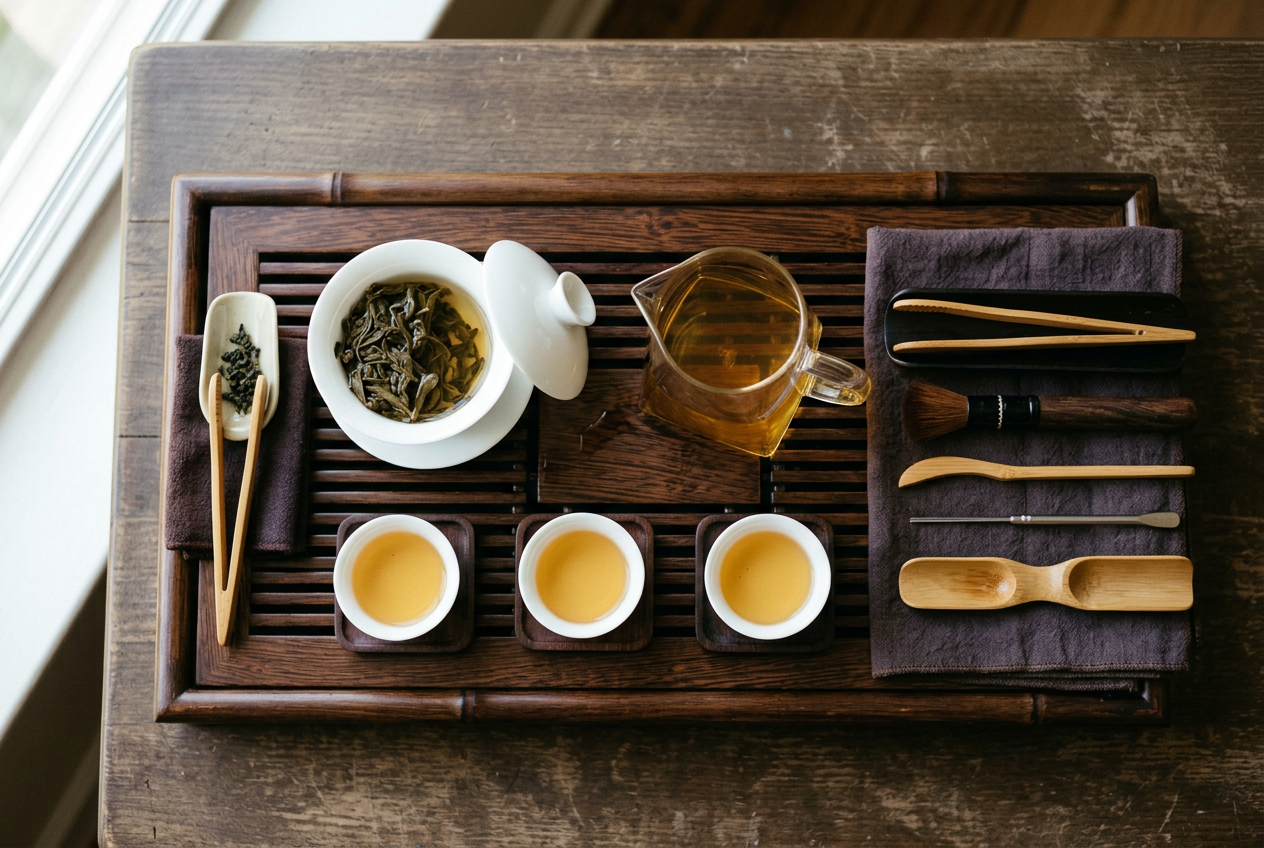
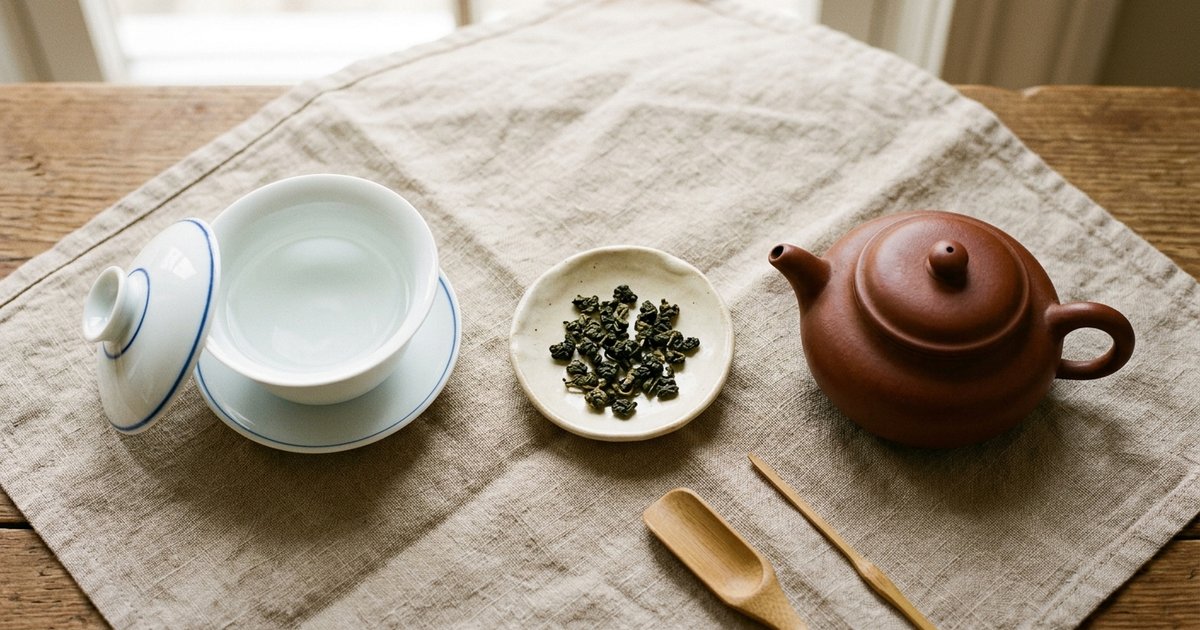
You do not need a museum-grade setup. A small gaiwan or Yixing-style pot, a fairness pitcher, three small cups, a tea tray, and good water will do. Traditionally the tea is an oolong, especially Chaozhou Phoenix Dancong, because its layered aroma rewards the short, repeated infusions that Gongfu Cha demands.
The mindset matters more than the ware. In Chaozhou, the host brews for the guests. The pot faces inward toward the host; the cups face outward toward the guests. Every pour is a greeting, and every round is a chance to notice how the leaves change. As Pan Yashun, director of the Chaozhou Intangible Cultural Heritage Protection Center, has said, the spirit of Chaozhou Gongfu Cha reflects the local ideal of he — harmony — between host and guest, person and nature, and the individual and the community.
Act 1: Prepare the space (steps 1–5)
茶具讲示 — Presenting the teaware. The host lays out the pieces so guests can see what will be used. This is not showmanship; it is transparency. The guest sees the pot, the cups, the kettle, and the tray, and knows the ceremony is about to begin.
茶师净手 — The host washes hands. A clean beginning. In a formal setting this is done quietly, almost as a private gesture, before touching the tea.
泥炉生火 — Lighting the clay stove. Traditional Chaozhou Gongfu Cha uses a small clay stove fueled by olive-pit charcoal. The charcoal burns hot and steady, and the olive pits add a faint, clean scent to the air. At home, an electric or gas kettle is a practical substitute; the point is to bring the water to a full, rolling boil.
砂铫掏水 — Filling the clay kettle. The water is drawn fresh. Chaozhou masters are particular about water: it should be light, sweet, and free of heavy minerals. Good tap water filtered once is usually enough for a home session.
榄炭煮水 — Boiling water over olive-pit charcoal. The host waits for the water to reach the right stage: not a violent rolling boil, but the moment when the bubbles rise like shrimp eyes or fish eyes. This old image — xiaxu shui (虾须水), water like shrimp whiskers — is the cue that the water is ready for oolong.
Act 2: Warm the vessels (steps 6–8)
开水热罐 — Warming the teapot. Boiling water is poured into the empty pot, swirled, and poured out. A warm pot keeps the first infusion hot and helps the leaves open evenly.
再温茶盅 — Warming the tea cups. The same hot water is used to warm the small cups. In Chaozhou, there are usually three cups, no matter how many guests are present. The cups pass from hand to hand, and the shared vessel becomes part of the conversation.
茗倾素纸 — Pouring the dry leaves onto plain paper. The host takes the tea from its container and spreads it on a plain sheet of paper or a shallow dish. This lets everyone see the shape and color of the leaves and gives the host a chance to estimate the right amount — roughly one-third to one-half of the pot's volume for oolong.
Act 3: Wake the leaves (steps 9–10)
壶纳乌龙 — Loading the oolong leaves into the pot. The leaves are lifted and placed into the warm pot. This is done with care; crushed leaves release bitterness, so the host handles them gently.
甘泉洗茶 — Rinsing the leaves with sweet water. A quick pour of boiling water covers the leaves, and the water is immediately poured out. This rinse is not discarded as waste; it is the first contact between water and leaf, and it wakes the leaves up. It also washes away surface dust and gives the host a first read of the tea's aroma from the lid.
Act 4: Brew and serve (steps 11–16)
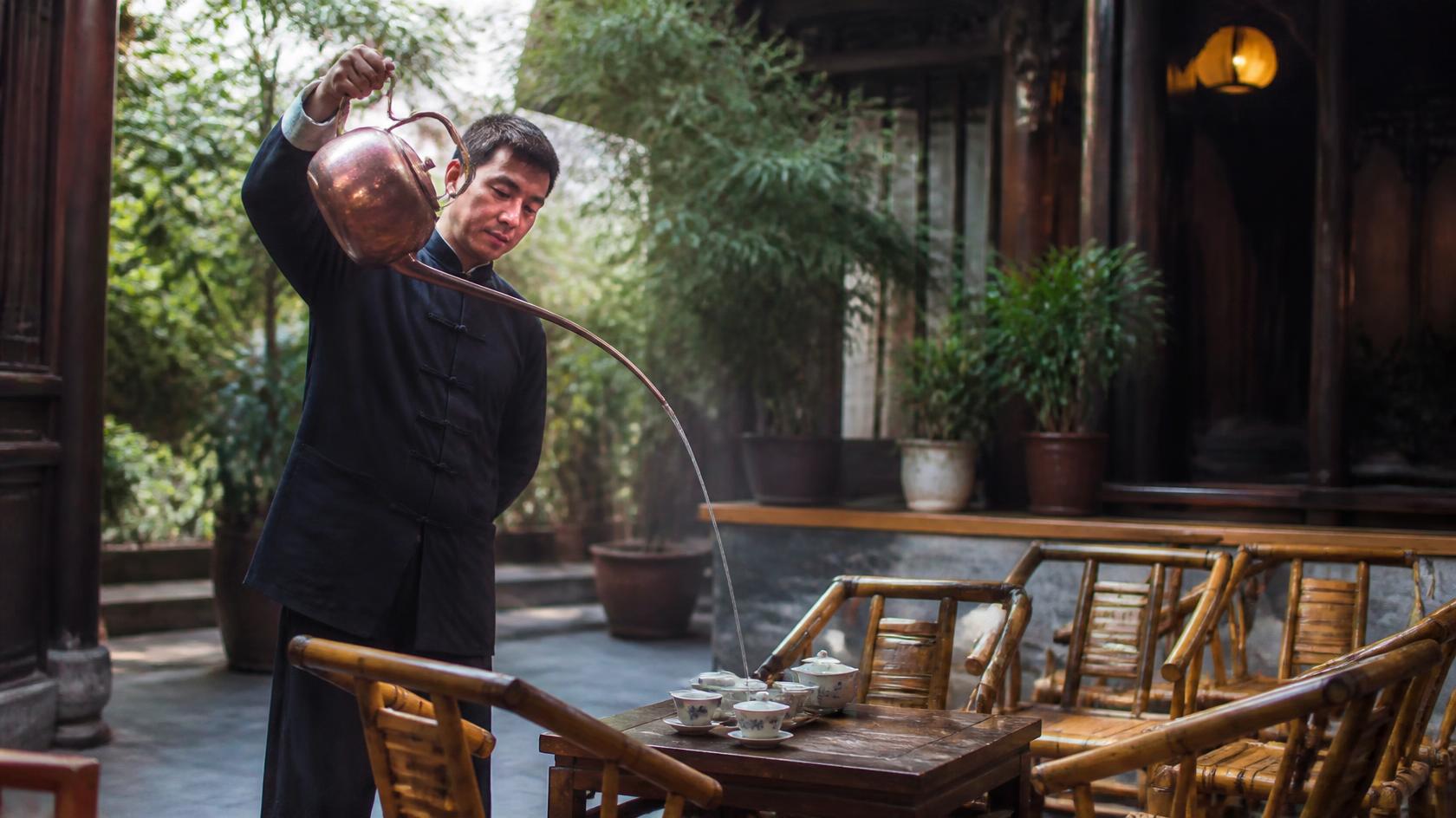
提铫高冲 — Raising the kettle and pouring high. The kettle is lifted high above the pot, and a thin stream of water circles down onto the leaves. The height cools the water slightly by the time it lands, and the force helps the leaves tumble and release their fragrance.
壶盖刮沫 — Scraping the foam from the lid. After pouring, a fine foam of tea oils may gather at the rim. The host uses the lid to scrape it away, keeping the liquor clean and the pot tidy.
淋盖追热 — Pouring hot water over the lid. A little more boiling water is poured over the closed lid. This keeps the pot hot from the outside and seals in the aroma while the leaves steep.
烫杯滚杯 — Rolling hot water through the cups. The host rinses the cups one last time with hot water, sometimes rolling the water between them. Warm cups hold the aroma longer.
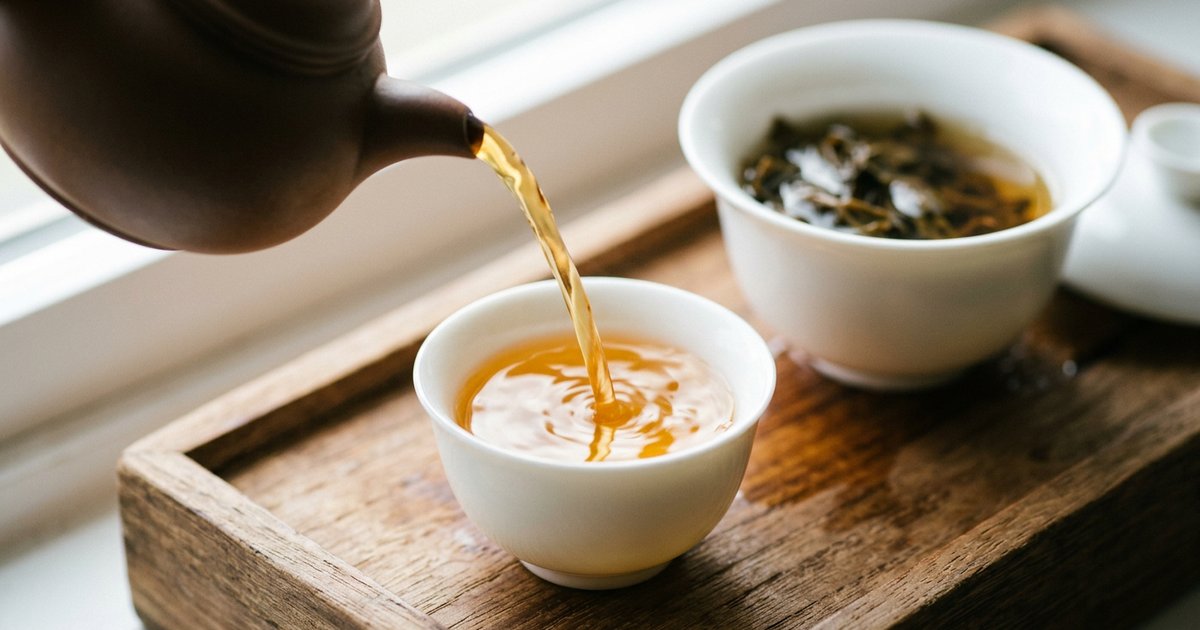
低洒茶汤 — Pouring the tea low. When the infusion is ready — often ten to twenty seconds for the first steep — the host lowers the pot close to the fairness pitcher and pours steadily. A low pour preserves heat and avoids splashing.
关公巡城 — Guan Gong patrols the city. This is the most famous step. The host moves the pot in a low circle over the cups, filling each one a little at a time. Like the legendary general Guan Yu making his rounds, the pot visits every cup. The result is that every guest receives tea of the same strength.
韩信点兵 — Han Xin points the soldiers. After the circular pour, the last few drops are tapped into each cup one by one. The name comes from the Han dynasty general Han Xin, who was said to command soldiers with precision. In tea terms, this final drop balances the richness of each cup.
Act 5: Taste and finish (steps 17–21)
敬请品味 — Inviting the guests to taste. The host presents the cups with both hands or gestures for guests to take them. The guest receives with both hands and a small nod.
先闻茶香 — Smelling the tea aroma first. Before drinking, the guest lifts the cup and smells. The first aroma is the top note; the empty cup, after sipping, will reveal deeper layers.
和气细啜 — Sipping gently and harmoniously. The tea is drunk in two or three small sips, not gulped. Gongfu Cha cups are small for a reason: they force you to slow down.
三嗅杯底 — Sniffing the bottom of the cup three times. After the tea is gone, the guest smells the inside of the cup. The lingering scent is called beidiao xiang (杯底香), or cup-bottom fragrance. A good Dancong will leave a clear floral or honey note.
瑞气圆融 — Returning to harmony and completeness. The host refills the pot, and the cycle begins again. The closing gesture is not really a closing; it is a return. Round after round, the same leaves reveal different faces.
How to adapt the twenty-one steps at home
You do not need to perform all twenty-one steps every time you make tea. The ritual can be simplified without losing its meaning:
- Skip the clay stove and olive charcoal. Use an electric kettle and bring the water to a full boil.
- Combine the warming steps. Rinse the pot and cups together with one pour of hot water.
- Keep the three famous gestures: the high pour, the circular "Guan Gong" pour, and the final "Han Xin" drops. These three alone teach you most of what you need to know about even extraction.
- Use one cup per guest if three feels awkward. The number three is traditional, but hospitality matters more than exact replication.
- Relax about timing. The first infusion might be ten seconds, the next fifteen, the next twenty. Let your tongue guide you.
Why the steps matter
The twenty-one steps of Chaozhou Gongfu Cha are not a test. They are a language. Each gesture says something about the relationship between host and guest: I have prepared this for you; I have taken care with the temperature; I have made sure your cup is as good as your neighbor's. The ritual turns a drink into a meeting.
Pan Yashun's observation is useful here: the inner meaning of Chaozhou Gongfu Cha is he — harmony. Harmony between the person and the tea, between the host and the guest, and between the present moment and a tradition that has been passed down for centuries. When you pour the twenty-first step, you are not ending the tea. You are completing one circle so the next can begin.
Frequently asked questions
Do I need a Yixing pot to practice Gongfu Cha? No. A gaiwan works beautifully, especially for beginners, because it shows the leaves and pours cleanly.
Why are there always three cups? Three cups are traditional in Chaozhou. They pass among guests, and the small number keeps the pace slow and intimate.
How many infusions can I get from one pot of leaves? Good oolong can yield five to fifteen infusions, depending on the leaf quality and how short your steeps are.
What does "Guan Gong patrols the city" actually do? It ensures every cup has tea of the same strength by distributing the liquor evenly before the final drops are added.
Is the rinse water drinkable? The first rinse is usually discarded, though some drinkers save it to warm the teapot or rinse the cups. The second infusion is the first one meant for tasting.