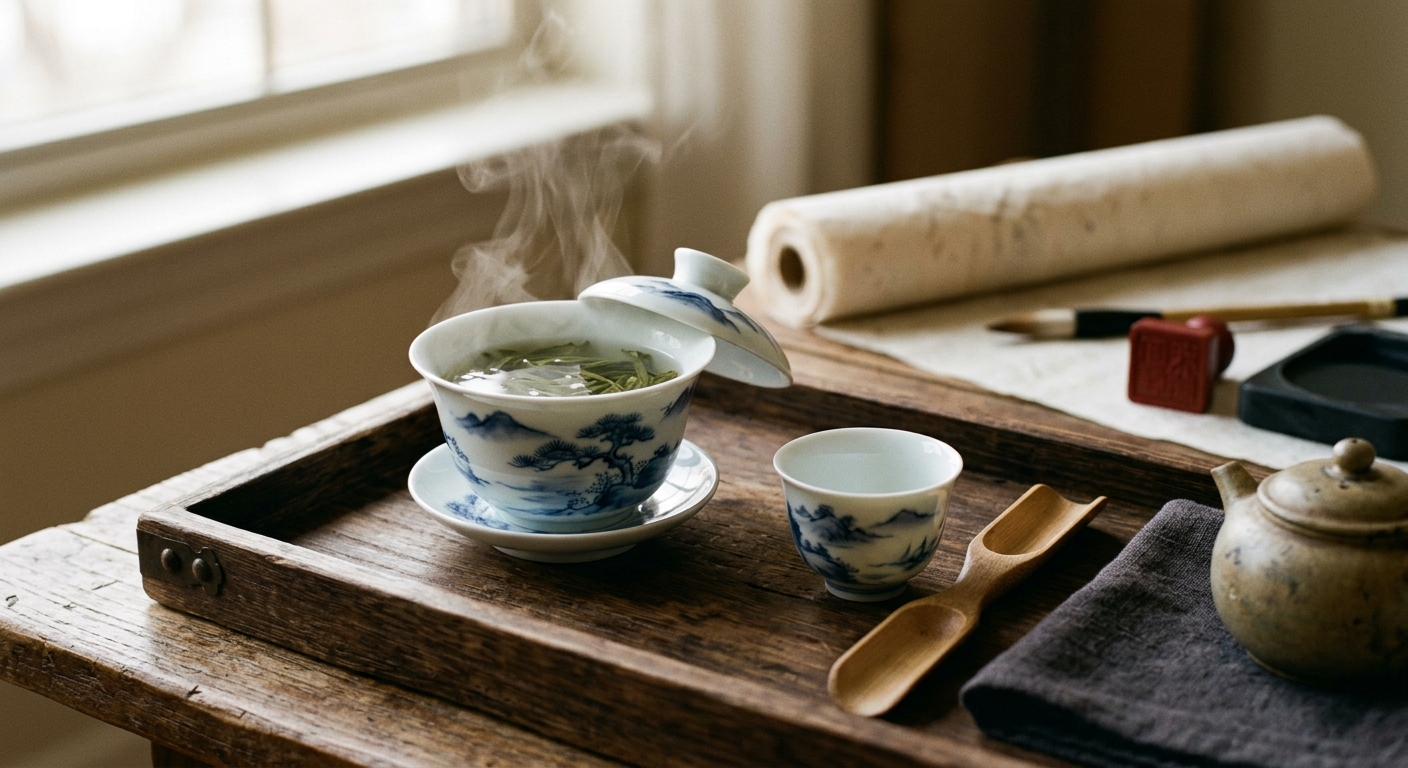
If you want to learn how to brew gongfu tea well, start with heat. Chinese tea brewing temperature is the single most controllable variable in your cup, yet it is the one beginners ignore first. The good news is that you do not need a laboratory thermometer or a century of training. A few reliable zones, a simple timer, and clean water will carry you from “just hot water” to tea that actually tastes like itself.
Chinese tea culture stretches back to Shennong and the Classic of Tea, and today the tradition is recognized by UNESCO as an Intangible Cultural Heritage [source:1]. That heritage is not a museum piece; it lives in the daily choices of water, temperature, and time. This guide distills those choices into a practical system you can use this afternoon.
Why Chinese tea brewing temperature matters
A tea leaf is a bundle of chemistry: amino acids for sweetness, catechins for structure, caffeine for energy, and volatile oils for fragrance. Each compound dissolves at a different speed, and temperature decides the order of the queue. Pour boiling water on a delicate green tea and you pull out too many bitter catechins before the sweet amino acids get a chance to appear. Brew a dark puer with lukewarm water and the compressed leaf stays half-asleep, giving you a thin, woody shadow of what it could be [source:2].
In other words, temperature is not about obedience to rules. It is about matching the heat to the leaf’s character: how tender the buds are, how much they have been roasted, how far they have been fermented, and how tightly they have been rolled or compressed [source:3].
The three temperature zones every tea drinker should know
Modern Chinese tea practice usually groups brewing temperatures into three bands. Think of them as cool, warm, and hot.
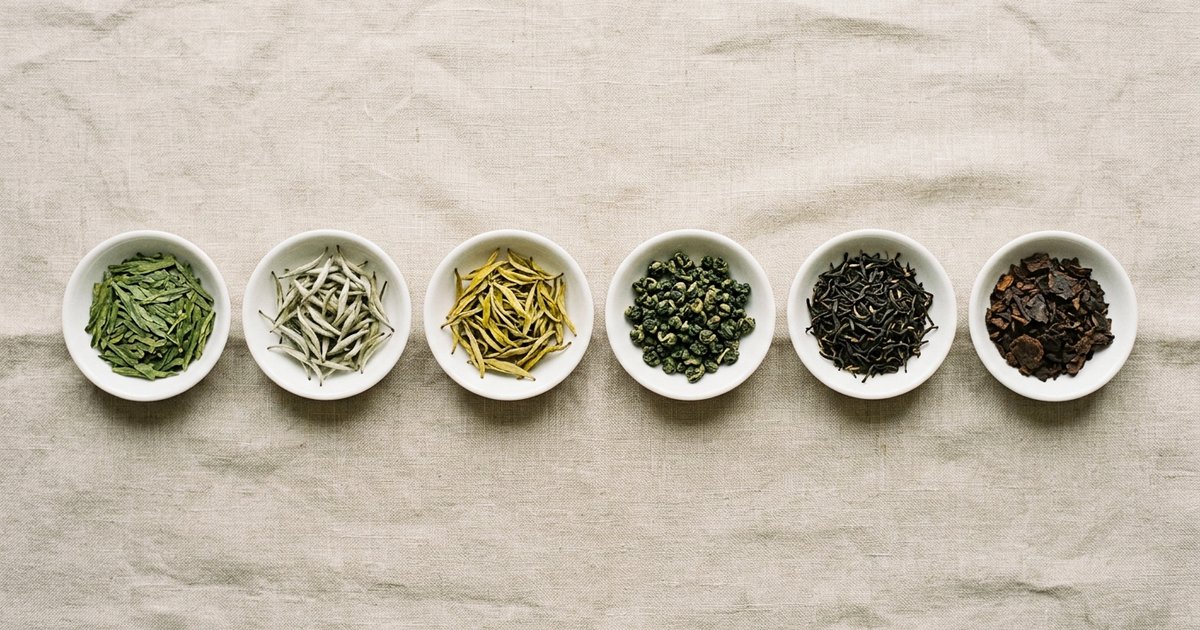
Cool: 70–80 °C (158–176 °F) This is the zone for tenderness. Green tea, yellow tea, white tea, and green-scented flower teas all prefer cooler water. Their buds and young leaves are rich in theanine and delicate aromatics that scorch easily. Lower heat teases out sweetness and keeps the liquor bright [source:2].
Warm: 80–90 °C (176–194 °F) This middle band suits everyday green teas, pan-fired greens, lightly fermented oolongs, and raw puer. The leaves are a little hardier, and the slightly higher heat helps them open without tipping into bitterness [source:2].
Hot: 90–100 °C (194–212 °F) This is the realm of roasted, fermented, and compressed teas: heavy oolongs such as Tieguanyin or Dahongpao, black tea, ripe puer, and dark teas. These leaves have been transformed by fire, oxidation, or microbes, and they need near-boiling water to release their depth. Flower teas made with roasted oolong bases also sit here [source:2][source:3].
Quick brewing chart: temperature and time by tea family
Use the chart below as a starting point, then adjust to your own taste and teaware. The two columns show two common approaches: a single Western-style steep in a large mug or pot, and the repeated short steeps of Gongfu Cha in a small gaiwan or teapot.
| Tea family | Temperature | Western steep | Gongfu Cha steep |
|---|---|---|---|
| Green tea | 70–80 °C | 1.5–3 min | 20–30 sec |
| Yellow tea | 75–85 °C | 2–3 min | 25–35 sec |
| White tea | 80–85 °C | 3–5 min | 25–40 sec |
| Light oolong | 80–90 °C | 2–3 min | 20–40 sec |
| Heavy / roasted oolong | 90–100 °C | 3–5 min | 15–30 sec |
| Black tea | 90–100 °C | 3–5 min | 15–30 sec |
| Raw puer | 85–95 °C | 2–4 min | 10–30 sec |
| Ripe puer / dark tea | 95–100 °C | 2–4 min | 10–25 sec |
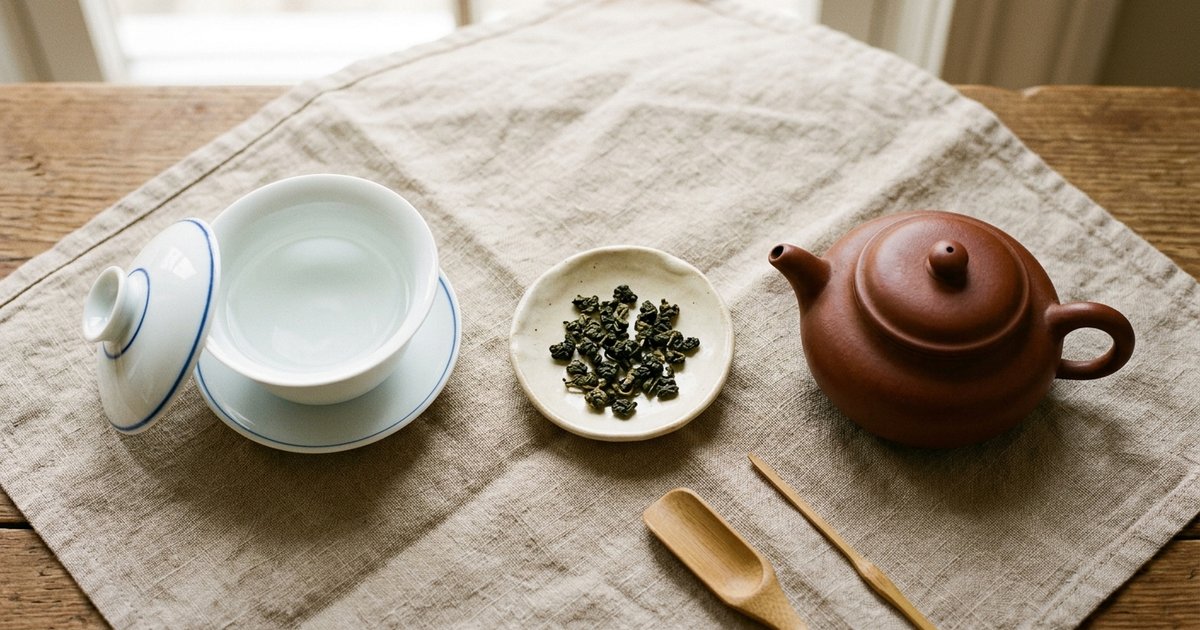
If you are using a gaiwan or small Yixing pot, increase the leaf amount and shorten the time. The same leaves will give you five, ten, or even fifteen distinct infusions, each revealing a different layer of aroma [source:5].
Steep time: the other half of the equation
Temperature opens the door; time decides how long the leaf stays inside. A high temperature with a short steep can taste gentler than a lower temperature with a long steep. That is why Gongfu Cha works: it uses more leaf and hotter water, but each infusion lasts only seconds. The result is a sequence of concentrated, nuanced cups rather than one gradually weakening mug [source:5].
For Western-style brewing, a good default is two to four minutes. Green teas lean toward the shorter end; white and black teas can handle the longer end. When in doubt, understeep. You can always add time on the next infusion; you cannot undo bitterness.
Compressed teas such as puer cakes, tuo, or zhuan usually benefit from a quick rinse with hot water. Discard the first pour after a few seconds. This wakes the leaves, rinses away surface dust, and softens the compression so the next infusion can begin properly [source:3].
Water quality and the boil: what the old texts teach us
There is an old saying among tea people: water is the mother of tea. No amount of temperature precision will rescue stale or mineral-heavy water. The classical texts recommend fresh, lively water—historically mountain spring water—with a clean, light taste [source:2][source:4]. In modern kitchens, filtered tap water or a good bottled spring water usually works well. Avoid distilled water, which can taste flat, and avoid water that has been sitting in the kettle reboiled all morning, which loses its dissolved oxygen and deadens fragrance.
Lu Yu, the patron saint of Chinese tea, described the boil in three stages: the first boil produces tiny bubbles like fish eyes; the second sends streams of bubbles up the sides; the third is a rolling tumult [source:2]. For most of us, the practical version is simple: bring the water to a full boil, then let it cool to the target zone. A thermometer is helpful, but with practice you can judge by the size of the bubbles and the sound of the kettle.
Gongfu Cha vs. Western-style brewing: one leaf, two paths
Both methods are valid; they simply ask different questions of the leaf.
Western-style brewing is the relaxed default: one teaspoon of leaf per cup, one long steep, and a mug you can carry to your desk. It is convenient and forgiving, especially for green and black teas.
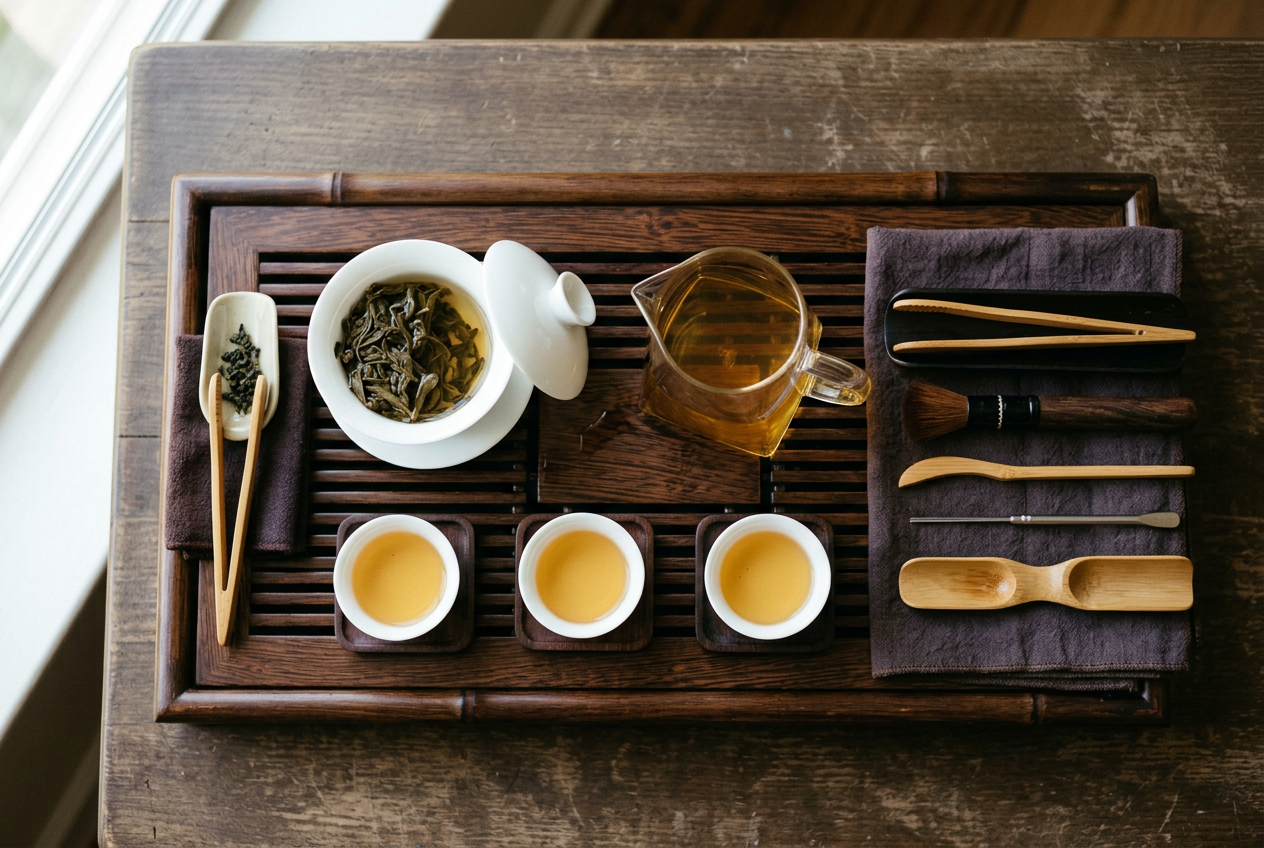
Gongfu Cha is the concentrated conversation: a small vessel, a high leaf-to-water ratio, water at the hotter end of the range, and a series of short infusions that last from ten seconds to a minute. Chaozhou Gongfu Cha, recognized as national intangible cultural heritage, follows a twenty-one-step sequence that includes warming the pot, rinsing the cups, high pours, and the famous “General Guan patrols the city” and “Han Xin counts the troops” distributions that ensure every cup tastes the same [source:5].
If you want to explore layers, choose Gongfu. If you want a quiet cup without ceremony, choose Western. The leaf does not judge.
Five mistakes that flatten a good tea
- Boiling everything. Black and dark teas love rolling boil; green and white teas do not. Respect the zones.
- Oversteeping delicate greens. Two minutes is often plenty. Three can turn a sweet Longjing grassy-bitter.
- Reboiling old water. Each reboil drives off dissolved oxygen. Start fresh when you can.
- Using too little leaf. Weak leaf gives weak feedback. Use enough to taste what the tea is trying to say.
- Skipping the preheat. A cold gaiwan or pot drops the water temperature the moment you pour. Warm your vessel first, especially for oolongs and puer.
A simple practice session
Pick two teas: one green and one oolong. Brew the green at 75 °C for two minutes, then the oolong at 95 °C with twenty-second Gongfu steeps. Taste them side by side. Notice how the green tastes of spring vegetables and chestnut, while the oolong unfolds through floral, creamy, and roasted notes across several rounds. The difference is not the leaf alone; it is the conversation between leaf, water, temperature, and time [source:3][source:5].
Final thought: brew with attention
The goal of this guide is not to make you a tea scientist. It is to give you a reliable starting point for Chinese tea brewing temperature and time so that you can stop guessing and start tasting. Start with the chart, trust your palate, and adjust. The best cup is rarely the one brewed with the most expensive leaves; it is the one brewed with enough attention to let those leaves speak.