What black tea is, and why the Chinese call it red
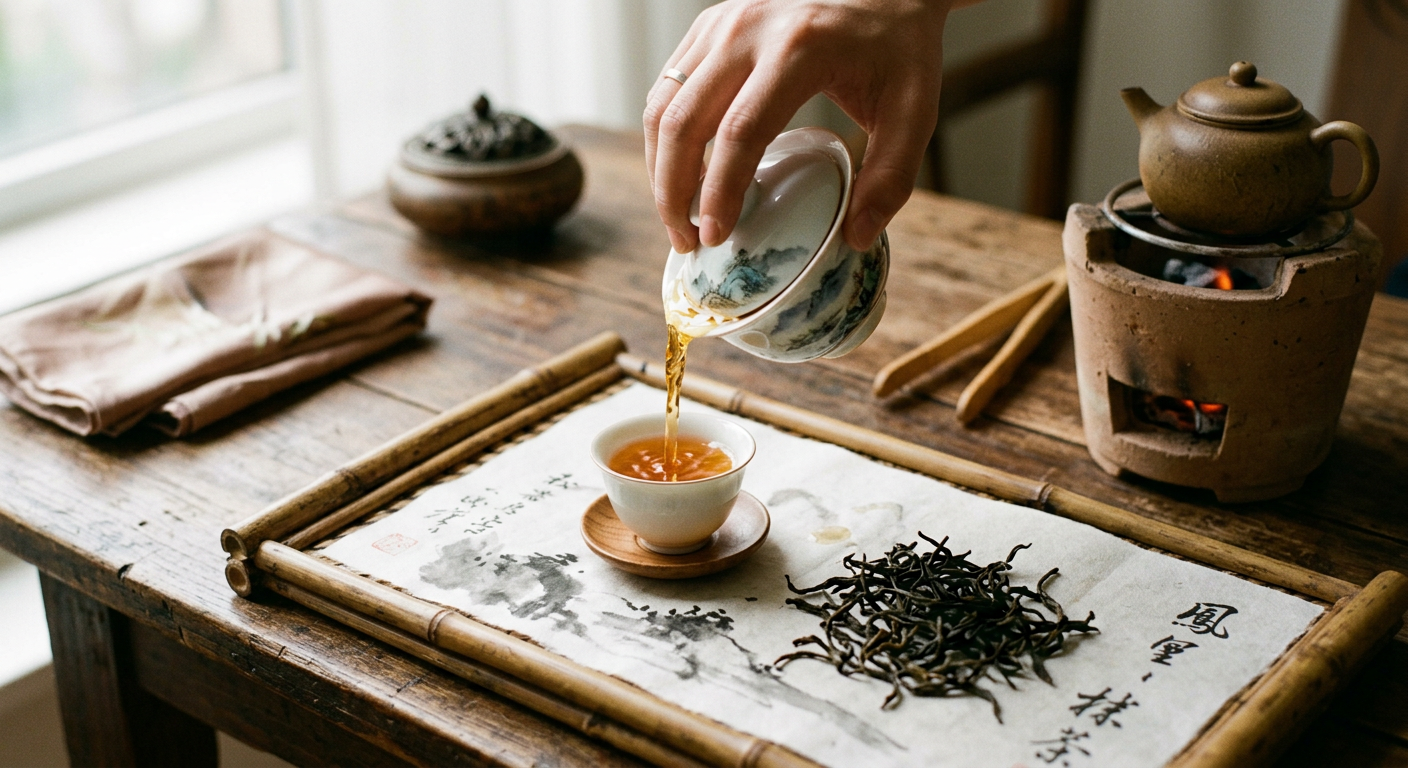
On a cool morning in Anhui, a tea farmer tilts a small white cup toward the light. The liquor inside is not black at all. It is clear amber, deepening to russet, the color of late autumn leaves against sky. In China this is called hong cha (红茶) — red tea. The English name "black tea" looks at the dried leaf; the Chinese name looks at the cup. Both are correct, and the difference is a useful reminder that the same tea can be seen from more than one angle.
Black tea is the most oxidized of the six major tea families. After picking, the leaves are withered, rolled to break their cells, and allowed to oxidize fully before drying[source:1]. That oxidation transforms the green, grassy chemistry of the fresh leaf into the darker, maltier, sweeter compounds that give black tea its body. The result is a tea that can be bold and brisk, or honeyed and floral, depending on where it grew and how it was made.
The earliest black tea is generally traced to the Wuyi Mountains of Fujian, where Lapsang Souchong (Zhengshan Xiaozhong) took shape[source:4]. From there the style spread: north to Anhui, where Keemun was developed in the late Qing dynasty; southwest to Yunnan, where Dianhong drew on large-leaf Assamica plants; and eventually across the sea to India, Sri Lanka, and Kenya. By the early 1600s Dutch traders were carrying Fujian black tea to Europe via Batavia[source:4], and by the 1800s black tea had become the backbone of afternoon tea in Britain and of chai culture across South Asia.
In 2022, "Traditional tea processing techniques and associated social practices in China" — a framework that includes black tea craftsmanship — was added to UNESCO's Representative List of the Intangible Cultural Heritage of Humanity[source:2]. That inscription matters because black tea is not merely a commodity; it is a Chinese craft with regional schools, each with its own terroir and technique.
The cup of black tea is a small theater: the leaf enters dark, the water turns red, and the room fills with the memory of mountains.
The two families: Chinese hong cha and Indian black tea
Most black teas fall into one of two botanical and stylistic families.
The Chinese family is built mainly on Camellia sinensis var. sinensis, the small-leaved Chinese tea plant. These teas tend toward finesse: aroma, sweetness, and a long aftertaste. Keemun (Qimen Hongcha) is the most famous, one of the "three great aromatic black teas" of the world, with a fragrance described as fruity, piney, and slightly floral[source:2]. The production is exacting: eighteen steps in total, four primary processes and fourteen refining stages, including the distinctive "bag beating" and sorting that give Keemun its fine, even leaf and layered cup[source:2]. Other Chinese blacks include the maltier Dianhong of Yunnan, the cocoa-and-pepper Yingdehong of Guangdong, the pine-smoked Lapsang Souchong of Fujian, and the plum-like Jiu Qu Hong Mei of Hangzhou[source:1].
The Indian and Sri Lankan family is built mainly on Camellia sinensis var. assamica, the large-leaved Assam plant[source:1]. These teas are generally stronger, maltier, and more astringent — qualities that stand up to milk and sugar. Assam is full-bodied and brisk; Darjeeling, grown in the Himalayan foothills, is lighter and more floral, often called the "champagne of teas"; Ceylon from Sri Lanka ranges from bright and citrusy high-grown teas to rich, burgundy low-grown teas[source:1]. Many breakfast blends, such as English Breakfast and Irish Breakfast, are built from these base teas.
Neither family is better. Chinese hong cha often rewards slow, attentive drinking; Indian and Ceylon blacks excel at everyday strength and at carrying milk, spice, and sweetener. Your brewing method should match the tea you have and the kind of cup you want.
Gongfu brewing: small vessel, many short infusions
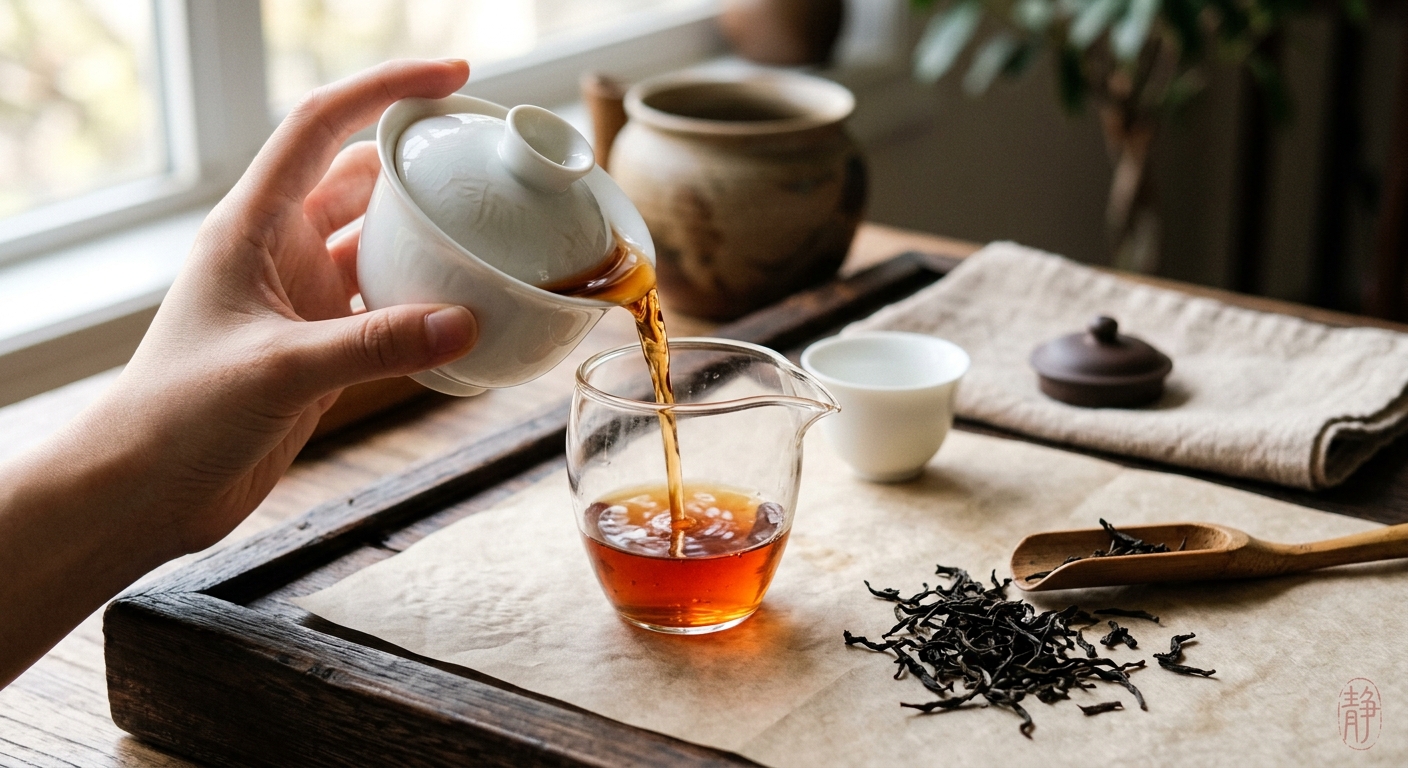
If you have read our guide to Gongfu Cha, you already know the principles: more leaf, less water, many short infusions. Black tea responds beautifully to this method, especially Chinese hong cha with its layered aromatics.
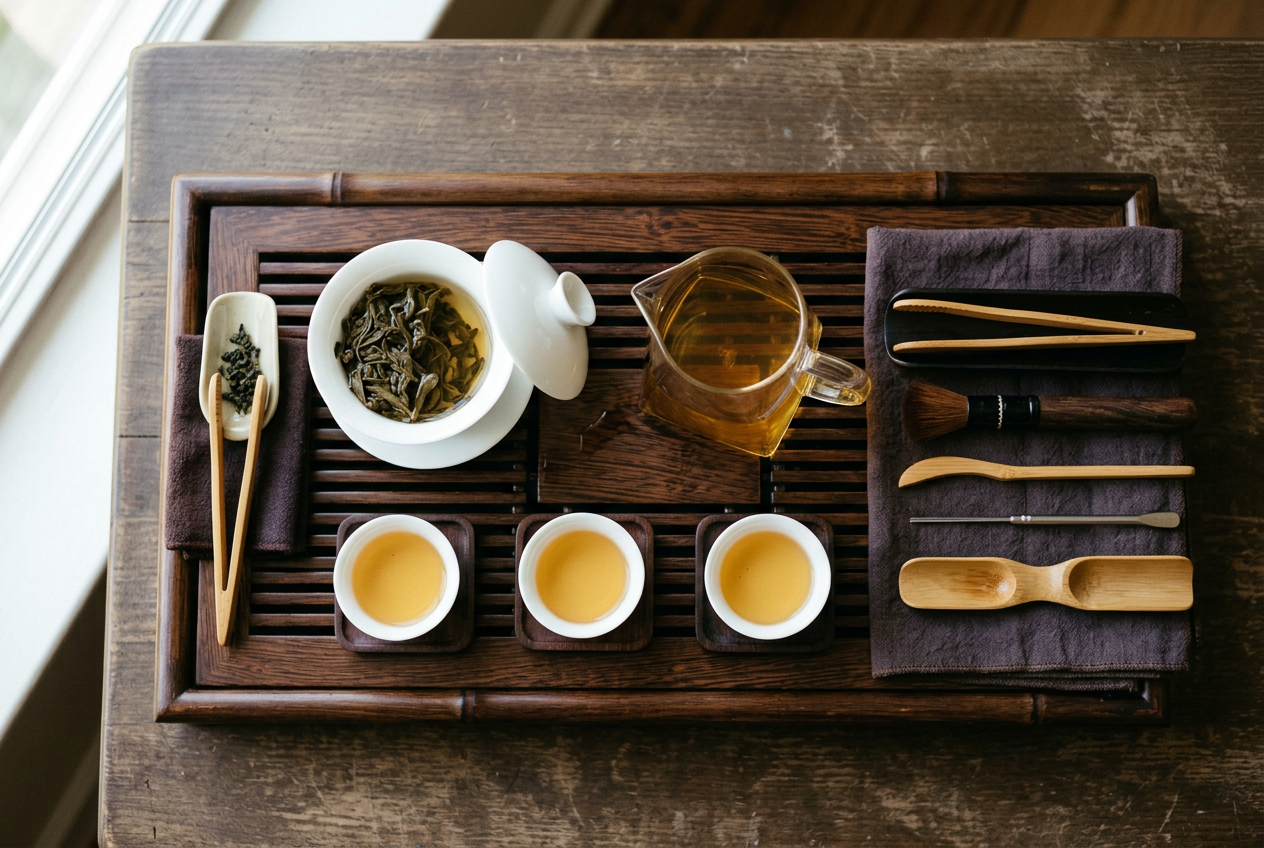
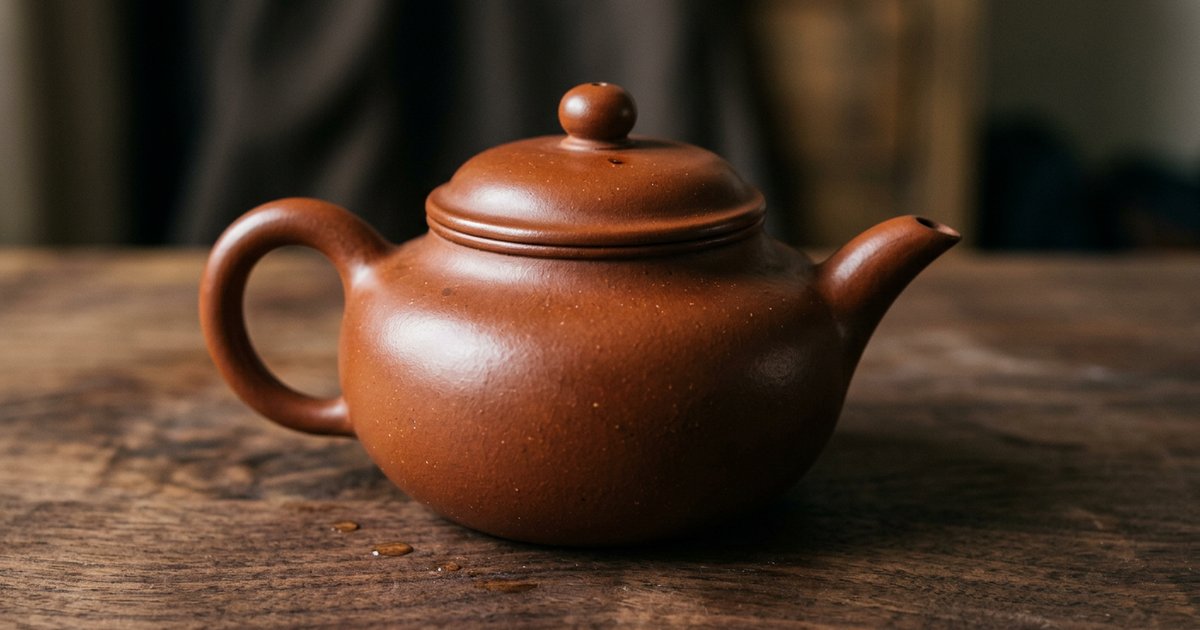
You will need a small vessel — a 100–120 ml gaiwan is ideal for beginners, while a small Yixing pot works well once you want to dedicate a pot to one tea family. Add roughly 5–7 g of leaf per 100 ml of water. That sounds like a lot if you are used to teabags, but Gongfu brewing extracts only a little each time, so the early cups stay bright rather than bitter.
- Warm everything. Rinse the gaiwan or pot, the fairness pitcher, and the cups with boiling water. A cold vessel steals heat and mutes the first infusion.
- Add the leaves. Place the measured tea into the warm vessel, cover, and give it a gentle shake. Lift the lid and inhale: the dry-leaf aroma is your first sip.
- The awakening rinse. Pour boiling water over the leaves and immediately pour it off. This opens the leaf and washes away surface dust. The rinse is not drunk.
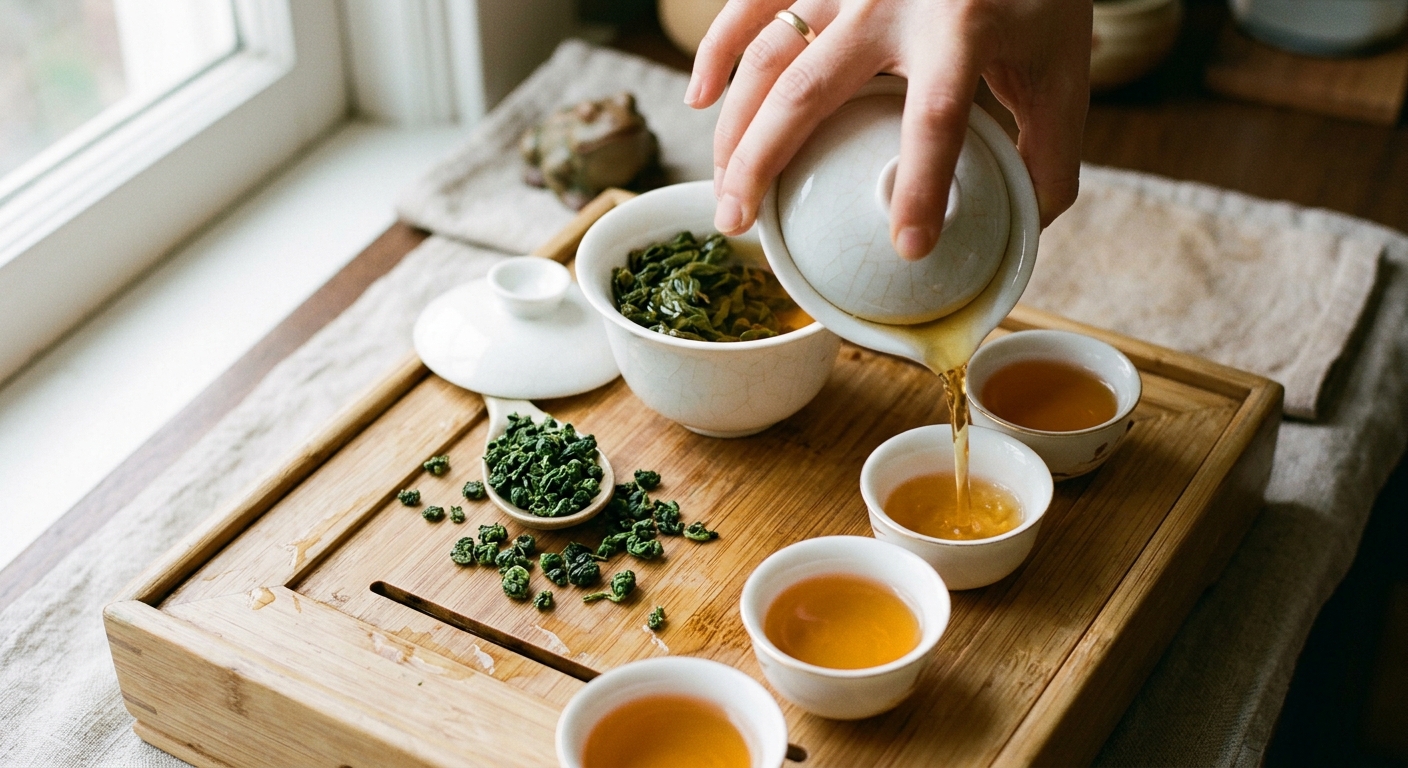
- First infusion. Refill with water just off the boil, cover, and steep for 10–15 seconds. Pour completely into the fairness pitcher, then into the cups.
- Extend gradually. Add 5–10 seconds to each subsequent steep. A good Chinese black tea may give six to ten infusions, moving from floral brightness into malt, honey, and dried fruit.
The Chaozhou Gongfu Cha tradition, inscribed on China's national intangible cultural heritage list in 2008, includes disciplined steps from heating the pot to "Guangong patrols the city" and "Han Xin counts the soldiers" — the low, even pours that distribute strength among guests[source:3]. You do not need to memorize the choreography to brew well, but the spirit behind it is worth keeping: serve the tea evenly, pay attention to each infusion, and let the leaves speak in their own order.
Western brewing: one generous cup
The Western method is the one most people know: a mug or large teapot, a single longer steep, and a straightforward cup. It is practical, forgiving, and perfectly suited to the stronger, more tannic black teas of India, Sri Lanka, and East Africa.
Use about 2–2.5 g of tea per 240 ml of water, or roughly one level teaspoon of loose leaf per cup[source:1]. Bring fresh water to a full boil, then pour it over the leaves. Steep for three to five minutes, depending on the tea and your taste[source:1]. Delicate whole-leaf teas such as Darjeeling first flush may do better at the shorter end; robust broken-leaf breakfast teas can handle the full five minutes.
If you are brewing a pot, warm it first with a quick rinse of hot water. This prevents the vessel from cooling the infusion below the extraction temperature the tea needs. When the steep is done, strain the leaves out completely. Leaving them in contact with the water will continue the extraction and can turn a balanced cup bitter or astringent.
This method is not inferior to Gongfu brewing; it is simply designed for a different rhythm. One pot, one pour, one cup. It is the method that carried black tea around the world and into millions of mornings.
Water, temperature, and leaf ratios
Black tea is less fussy about temperature than green tea, but it is not indifferent. As a general rule, brew it with water between 90 °C and 100 °C (194–212 °F)[source:1]. Whole-leaf Chinese hong cha and first-flush Darjeeling prefer the lower end of that range, around 90–95 °C, to preserve their high aromatics. Robust CTC breakfast teas and Assams can take a rolling boil.
Water quality matters as much as temperature. Soft, fresh water with moderate mineral content will carry the tea's fragrance. Hard water, heavy in calcium and magnesium, can flatten aroma and leave a visible film of oxidized polyphenols and calcium carbonate on the surface of the cup[source:1]. Distilled or reverse-osmosis water, on the other hand, can taste hollow. If your tap water is hard, filter it before brewing.
| Method | Leaf ratio | Water temperature | Steep time | Infusions |
|---|---|---|---|---|
| Gongfu | 5–7 g per 100 ml | 95–100 °C | 10–30 seconds | 6–10+ |
| Western | 2–2.5 g per 240 ml | 90–100 °C | 3–5 minutes | 1–2 |
Use these numbers as starting points, not commandments. The exact leaf, the exact water, and the exact vessel you own will all shift the ideal settings. Taste, adjust, and taste again.
Common mistakes and how to avoid them
- Water too cool. Black tea needs heat to unlock its malt and sweetness. Water below 85 °C often produces a thin, sour cup.
- Over-steeping. Longer is not always stronger; beyond five minutes, tannins dominate and the cup turns harsh. Strain on time.
- Too much leaf in a large pot. Gongfu ratios do not scale directly into a one-liter teapot. If you are brewing Western style, use the Western ratio.
- Reboiled water. Water that has been boiled repeatedly loses dissolved oxygen and tastes flat. Start fresh each time.
- Storing near strong odors. Black tea retains its flavor for longer than green tea, but it still absorbs smells[source:1]. Keep it sealed, away from spices, coffee, and soap.
- Rinsing a delicate first-flush Darjeong. Some whole-leaf Chinese blacks benefit from a Gongfu rinse; a light Darjeeling first flush may not need it. Let the leaf guide you.
Conclusion: the right method is the one you will use
How you brew black tea depends on what you want from the cup. If you have twenty minutes, a small gaiwan, and a good Keemun or Dianhong, the Gongfu method will show you how the tea changes from steep to steep — floral, then honeyed, then mineral and sweet. If you have a busy morning and a sturdy Assam, the Western method will give you one reliable, comforting cup.
Black tea has traveled from Wuyi Mountains to London drawing rooms, from Anhui workshops to Indian tea gardens, and from UNESCO heritage lists to your kitchen counter. However you brew it, you are taking part in a long conversation between leaf, water, and human attention. Start with good leaves, use fresh water, and pay attention to the first sip. The rest is adjustment.